
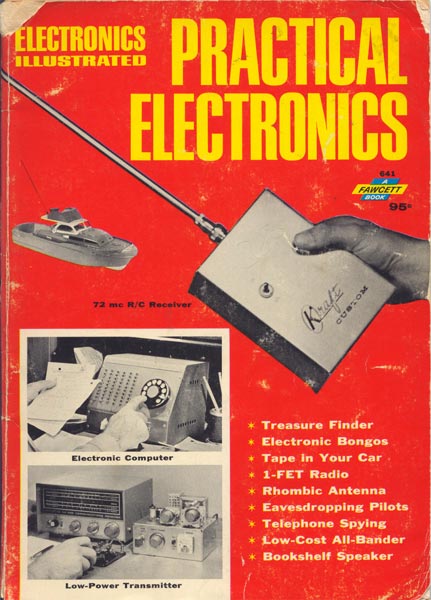
The 1967 issue of “Practical Electronics”, a compilation of construction articles from “Electronics Illustrated” magazine, contained an article titled “Build this Electronic Computer”. The subtitle explains: “At the quick spin of the dial it adds, subtracts, multiplies or divides”. In reality it was a six-digit, four-function calculator, and an excruciatingly slow one — but it afforded enterprising hobbyists the thrill of building their very own “Electronic Computer” (this was a decade before the “Home Computer” revolution, and even low-cost electronic calculators were still a few years in the future).
The operation of this machine involved dialing in the digits of each number, moving a switch after each digit. Computation results were shown on an array of small neon lamps.
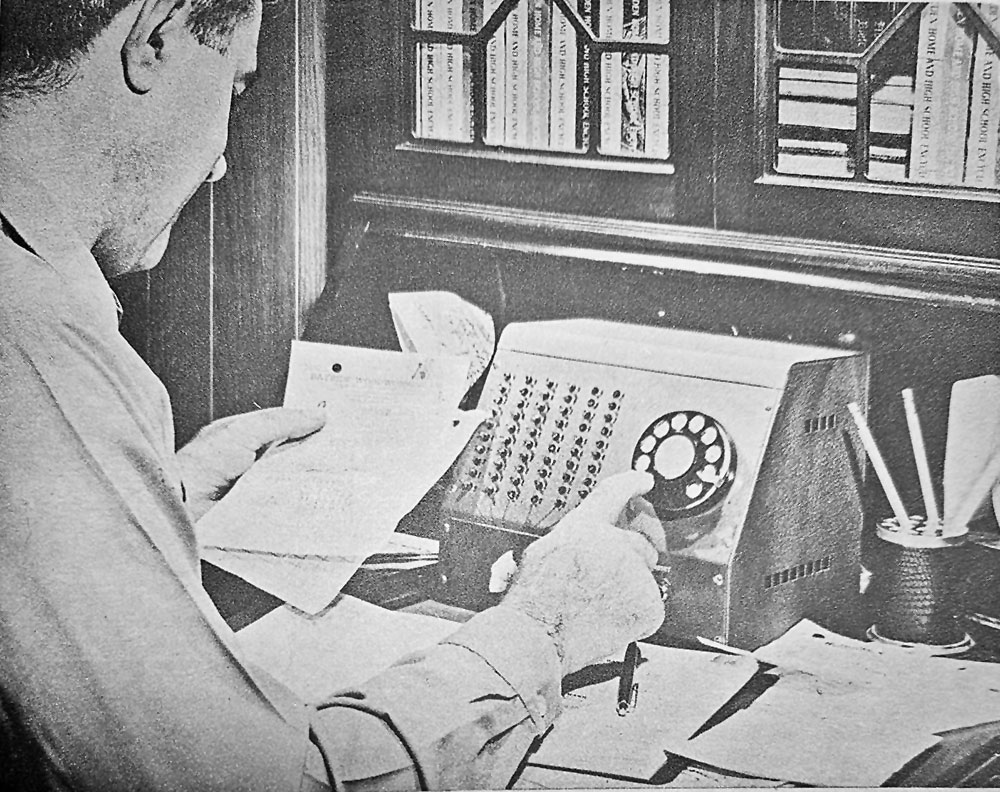
The pulse train generated by the whirring dial was passed by the switch to the appropriate “Decade Counter” which advanced the lit lamp along the corresponding vertical row. Carry from one row to the next was handled by vacuum tube circuitry.
When you consider the time to input the numbers and read the “digital” display, this weird machine was far slower in adding than the mechanical desk calculators that were still in use at the time. But of course, it was “electronic”, which made it a wondrous thing to build by oneself.
As for the other 3 operations – subtraction was done by adding the digits’ “nines complement”, and multiplication and division were done by a combination of mental operations on each pair of digits, and addition on the machine of the partial results… Ouch!
Below are some construction details. Of interest: the 60 neon lamps had to be sorted patiently according to their firing voltages. In other words, the slight random variation in their electrical parameters had to be taken into account in order to create matched sets for each decade counter. That’s how hobbyists did things in those days!
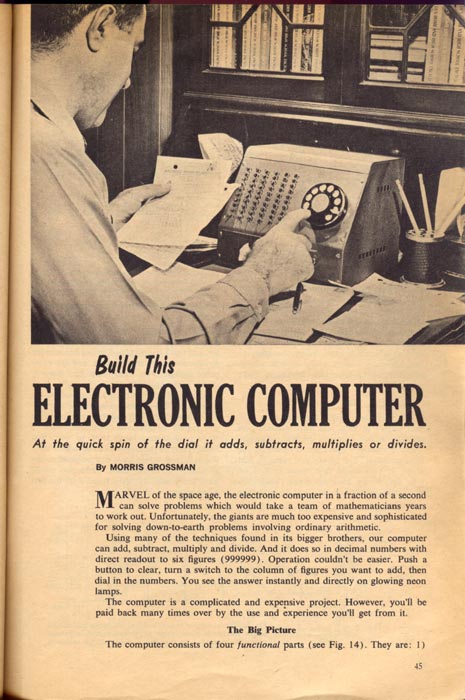
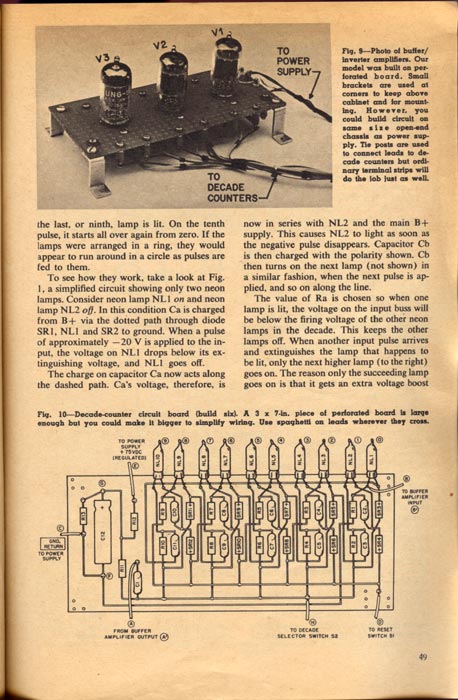
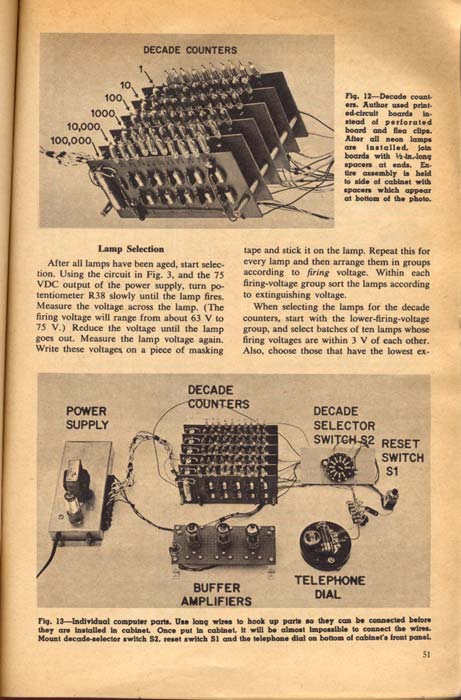
Exhibit provenance:
I did not build this computer, but I was an avid reader of Electronics Illustrated in my teens. This magazine survived since those times on my top shelf.
More info:
Here is a scan of the entire article, in case you want to try and build one!