
The Ken+Add calculator had pretty low functionality, even for the fifties… it was a four-digit, one-function calculator. And yet it’s hard to dismiss it, for it strikes you immediately with the quality of its design and construction.
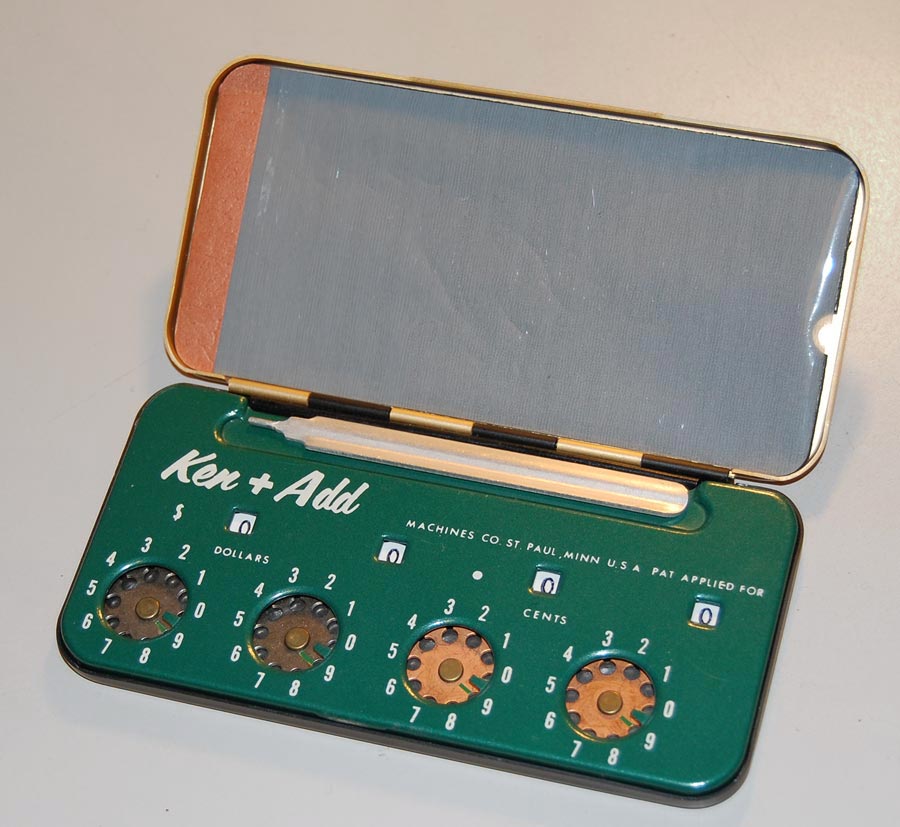
Built in Minnesota in the 1950s by a company I can find no additional information about, the Ken+Add is one of the many dial-input adders that were introduced in the first half of the 20th century. The basic idea goes back to the 17th century, and is often attributed to Pascal — though his implementation was more sophisticated, and in any case came later than that of Wilhelm Schickard.
Unlike my Kes-Add and many others, who do addition and subtraction by turning the dials in either direction, the Ken+Add only does addition; turning in reverse fails to effect any needed borrow from the next higher digit.
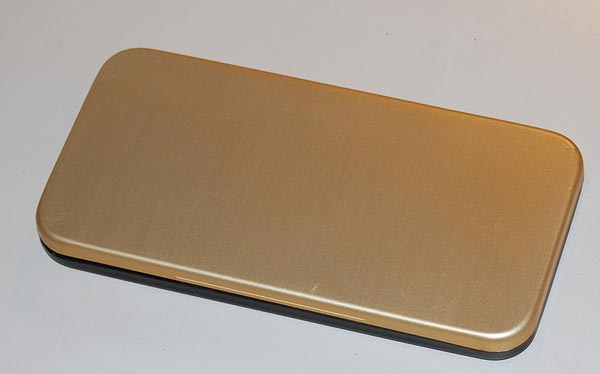
It is, as I said, very nicely implemented. Built into a compact 13.1×6.5×1.2 cm hinged metal case, it’s as elegant and solidly precise as a good quality cigarette case. The flat aluminum stylus, housed in a shallow depression inside the case, turns the dials with ease, and even the ultimate test of a gear train adder — adding one to 9999 — is smooth and effortless, without the resistance felt in the other dial adders I own. And as the photos show, it looks pretty when open and very sleek when closed.
Well, I couldn’t resist… I took the thing apart to see what makes it tick. You can see the disassembly process in the photos.
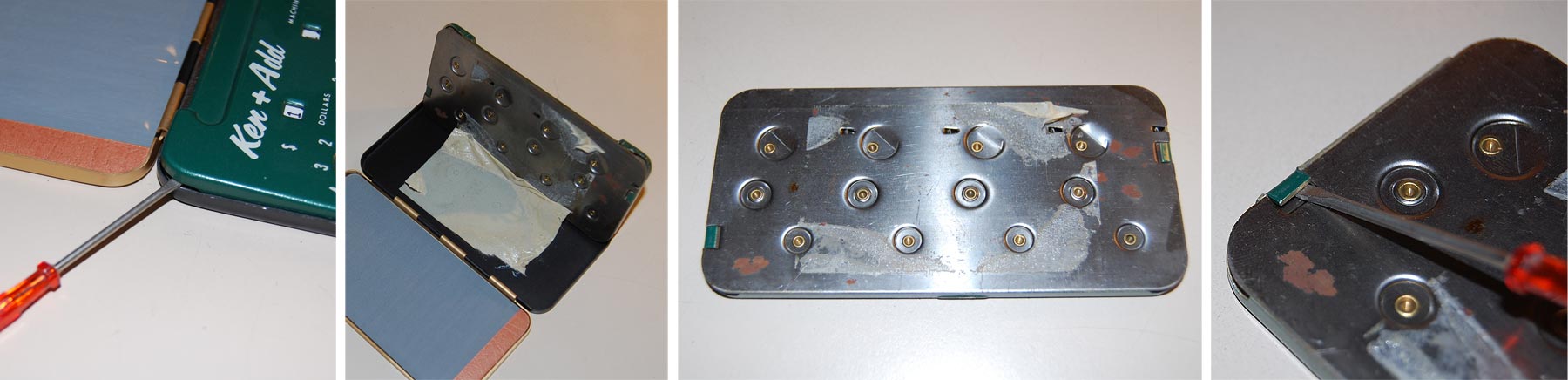
The mechanism this revealed is indeed of remarkable quality, as can be seen in the next photo.
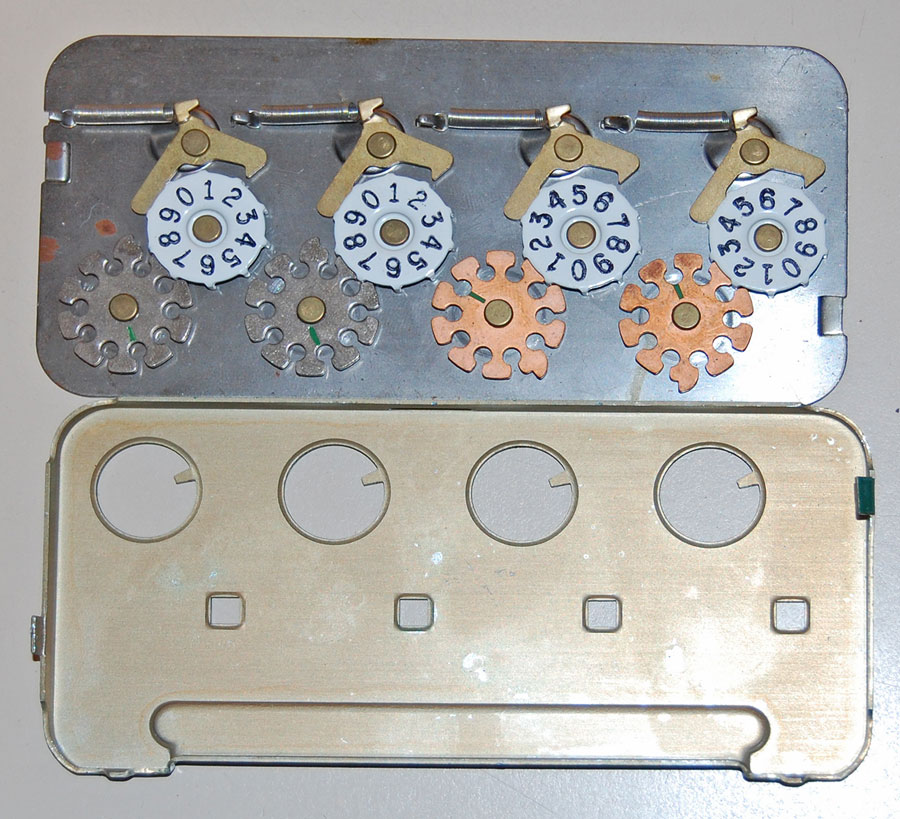
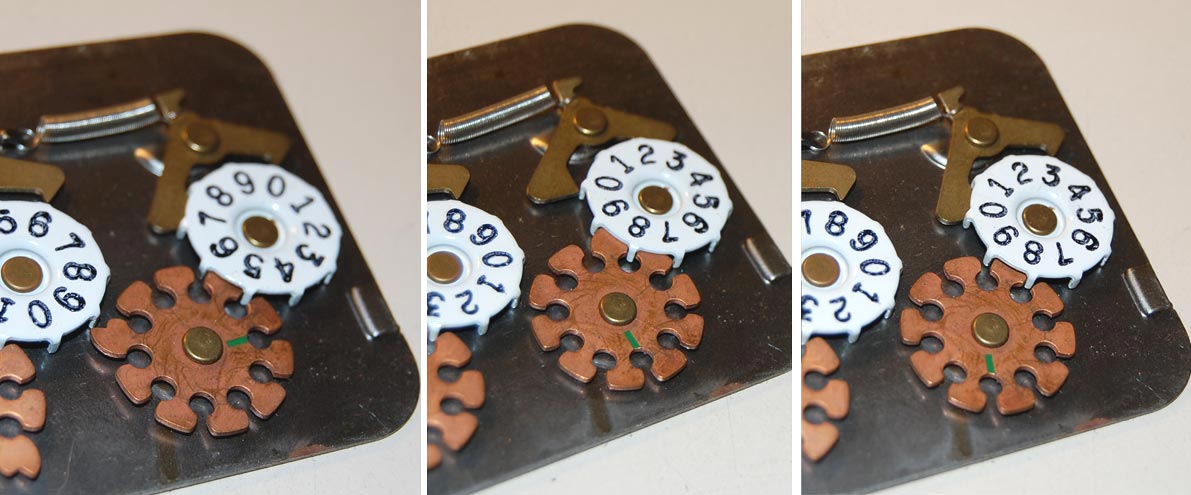
We see the expected gearing for passing the carry from digit to digit, and the spring-loaded latches that ensure the dials stop at the right position. The white wheels are interesting, with their three dimensional structure that permits the other cogwheels to have wide flat teeth instead of small pointy ones. And you can see why this device can only add: the longer carry tooth on the flat wheels is asymmetric, so it moves the next wheel when it turns clockwise (left photo below) but can slip when moving in the opposite direction. Not sure why they designed it this way…
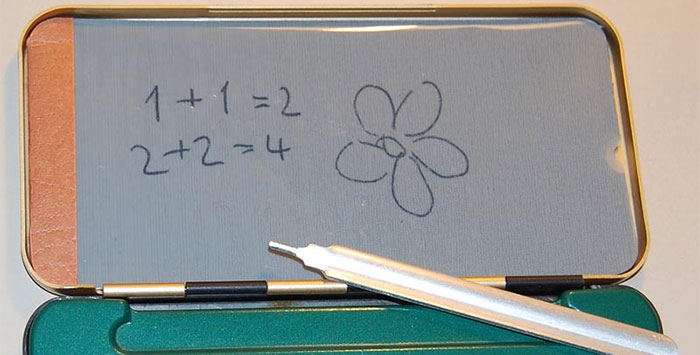
An interesting touch on the Ken+Add is the “Magic slate” fitted in the lid. This uses a trick common in children’s toys in those days: a peel-back dry writing surface. Use the stylus to jot interim results on it, and use it again to lift the top film and erase them. A calculator with a memory!
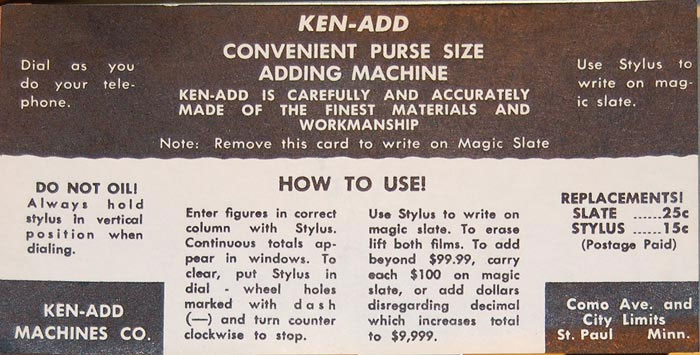
The last photo shows a printed instruction sheet that goes in the lid, covering the slate when it isn’t in use.
Exhibit provenance: eBay.
More info:
- Ken+Add information at Jaap Scherphuis’s mechanical calculators site.
- The rechnerlexikon, a wonderful German Wiki for mechanical calculation knowledge, has a scan of a brochure: http://rechnerlexikon.de/upload/6/61/Ken_plus_Add.pdf .