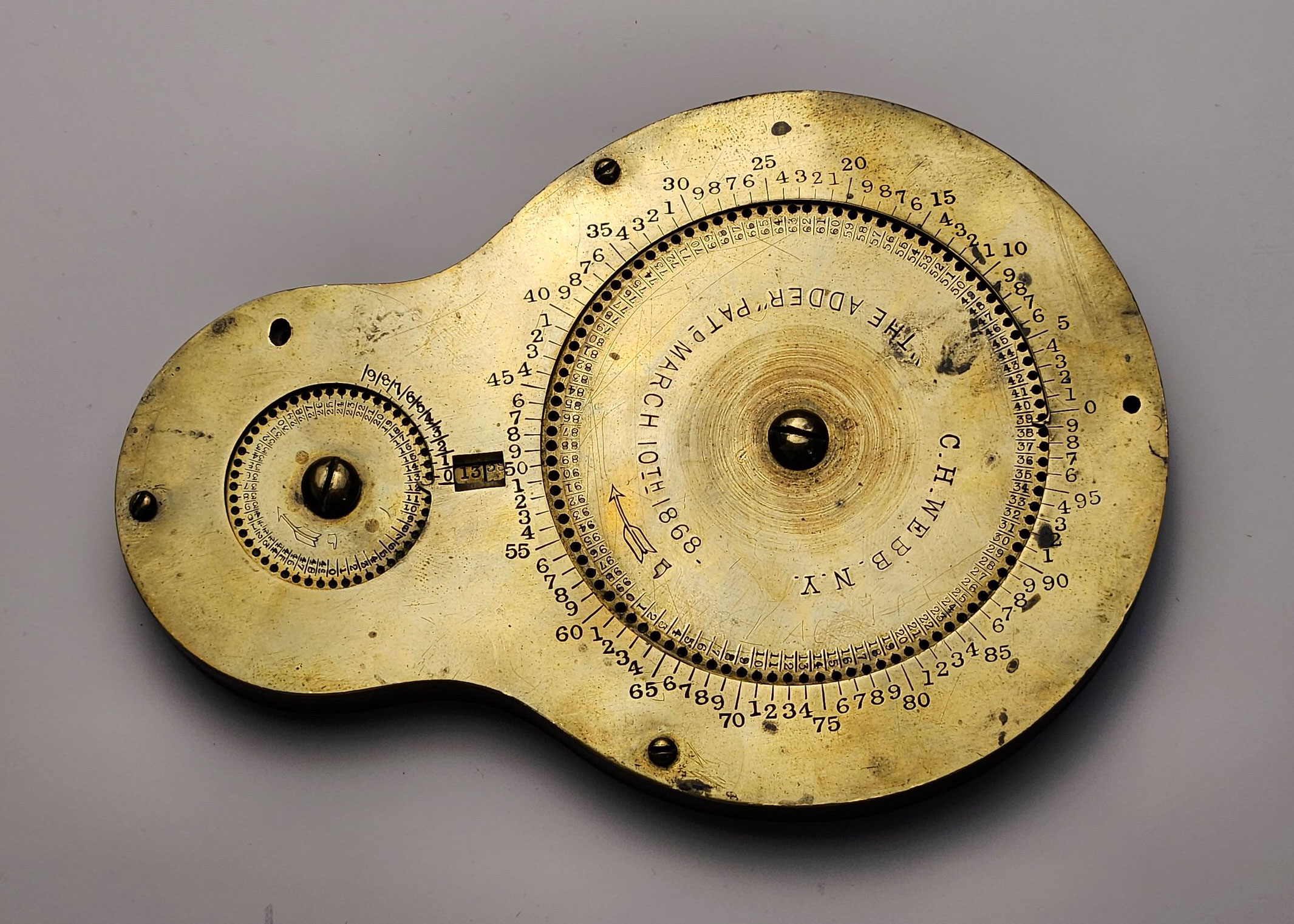
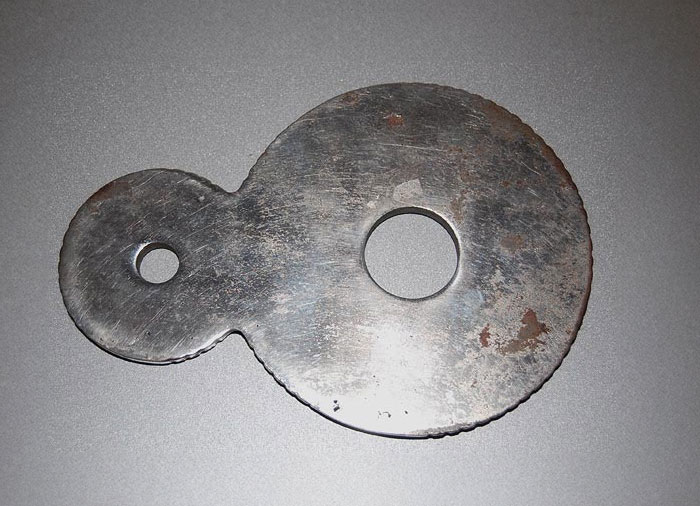
Many mechanical calculating instruments are more or less rectangular in shape; a few are circular or cylindrical. But only one design has the shape of a “figure eight” – the Webb Adder. This curiously shaped item in my collection was developed by Charles Henry Webb (1834–1905), an American inventor, poet, and journalist, who was a man of many talents; he applied some of them to inventing innovative adding machines which he sold from the 1860’s to the turn of the century.
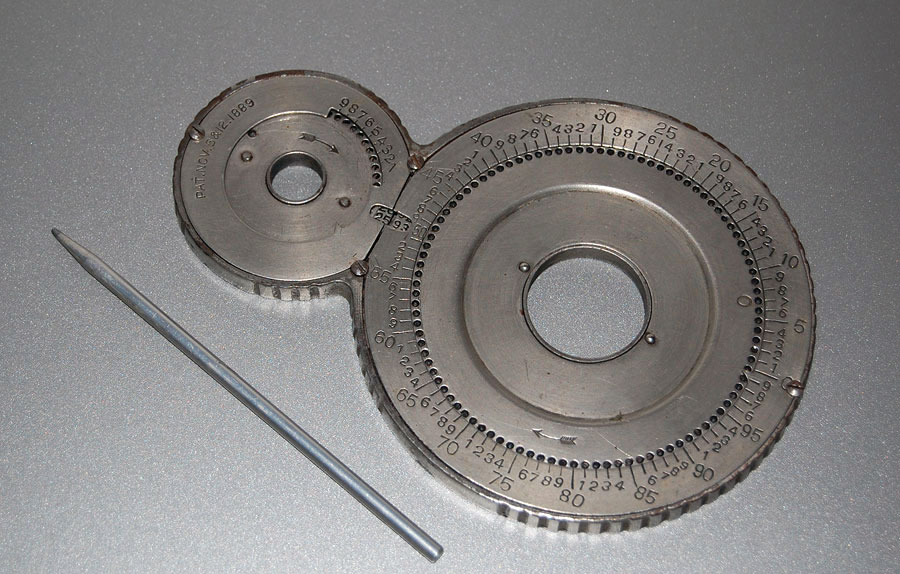
In addition to the famous figure eight device (which had a number of models, the earliest patented in 1868, and a number of knock-offs made by Victor and others), Webb also devised a “Ribbon Adder” in 1886, which failed to achieve commercial success. The version I have here bears the 1889 patents, an improvement over the original model. Its nickel-plated cast iron case shows some rust spots, often seen in these 120-year-old devices; but the mechanism is perfectly good!
Operation of the Webb adder is simple: you reset the two dials so the readout in the small window where the two wheels join shows 000; then you simply dial in the numbers to add, numbers up to 99 on the large wheel and hundreds on the small one, using a pointed stylus, until you hit the stop (in a manner reminiscent of the telephone dials that soon no one will remember). The sum is seen in the readout window, and can go as high as 4999, the machine’s maximum capacity. When the big wheel reaches 99 and you add another number to it, a carry operation takes place with the small wheel incrementing by 1 (that is, a hundred).
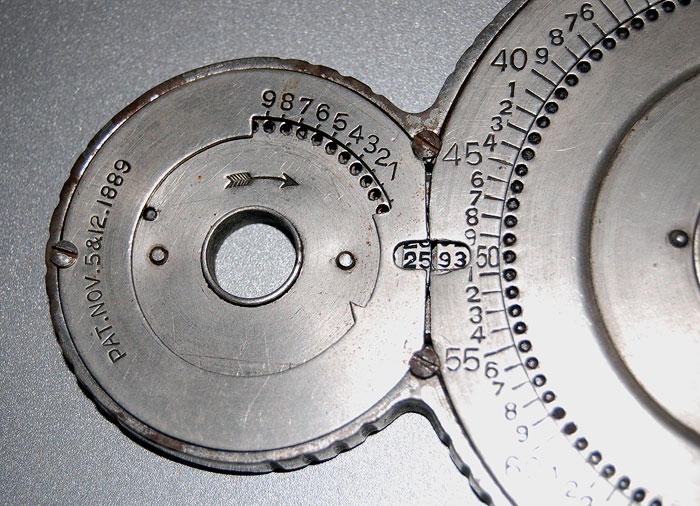
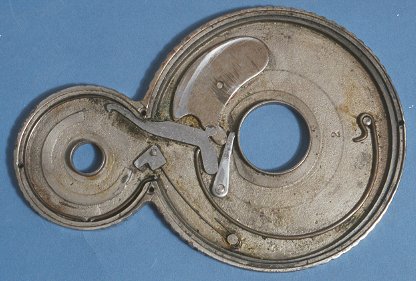
What makes this operation interesting is that unlike most other geared-wheel adders of its time the Webb uses stored-energy carry. The simpler adders use straightforward gearing to make the carry operation; each dial has a single tooth that engages the next gear up when it completes a full revolution. The problem with this is that it takes some force to drive the gear train, especially when adding 1 to a number like 9999, since the stylus has to rotate all the gears at once. The first inventor to solve this problem was Blaise Pascal in the 17th century; his Pascaline, one of the very first mechanical calculators, introduced a sequential carry mechanism where each gear passed the carry under its own power, so to speak, once the previous wheel triggered it to do so. The Webb has only one carry transfer position, but it uses a similar idea. The units wheel is connected to a large spring which is incrementally compressed until fully cocked; when the moment comes to make the carry, the spring releases its energy into advancing the hundreds wheel. You can see this carry mechanism here:
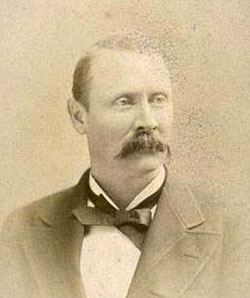
And here is a photo of the enterprising Mr. Webb himself, taken in 1877.
Exhibit provenance:
I bought this item at an annual meeting of the Oughtred Society. The stylus I got with it (seen in the photo above) is of Aluminum, and thus certainly not original.
More info:
The patent for this device, with drawings, is available here.
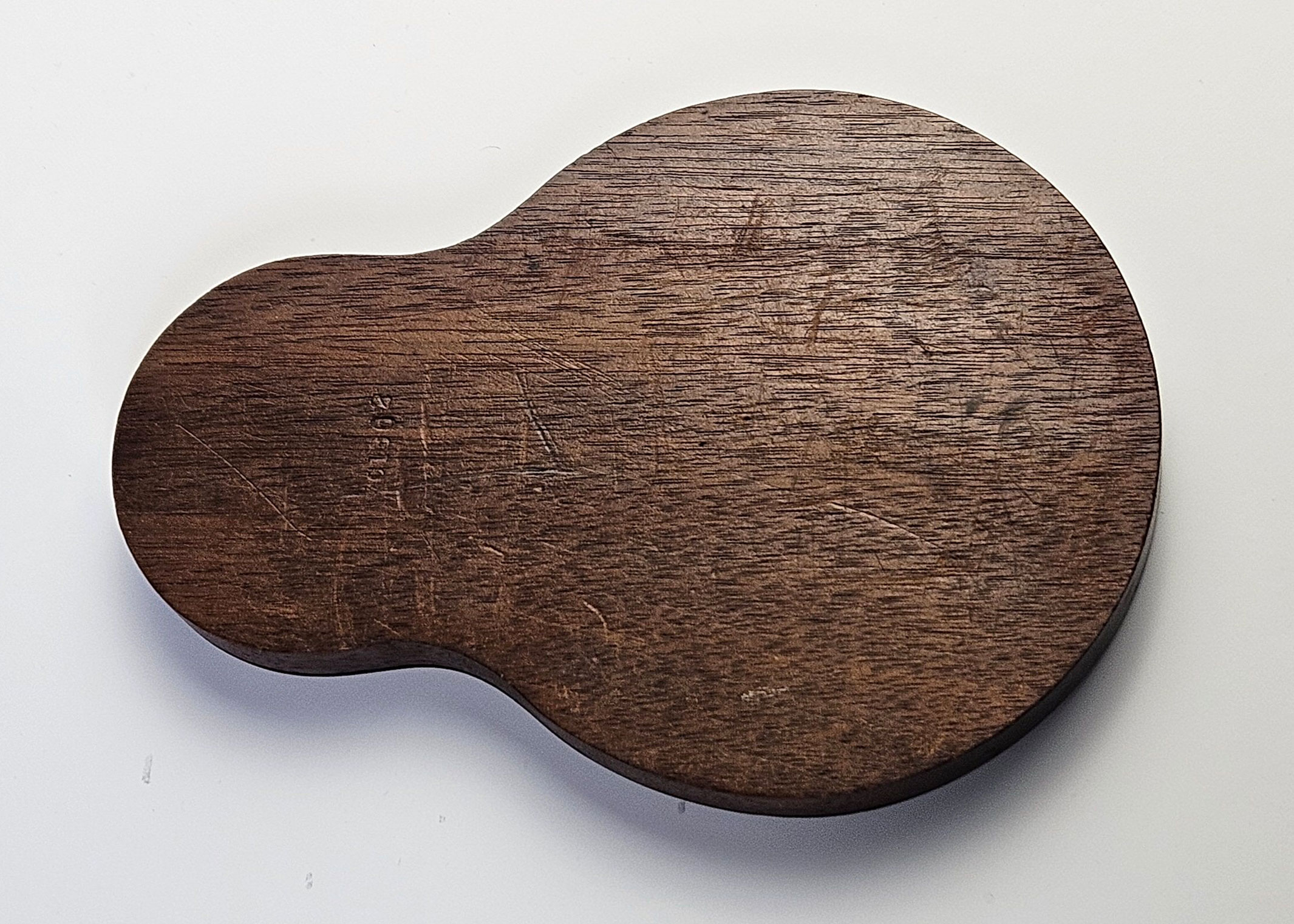
And here, a much later arrival to my collection than the 1889 model seen above, is the original 1868 model. This has a brass face and a wooden base visible from the back.