
Nuclear blast slide rules from the cold war era
I’ve lived through the cold war, and I remember well the madness governing its politics. Basically the USA and the USSR put a huge effort into amassing thousands of nuclear warheads in order to convince each other that they’d better not use them, or else. The apt acronym in use was MAD – Mutually Assured Destruction; they actually had the equivalent of two tons of TNT for each man, woman and child on the planet. The two militaries were preparing in earnest to unleash this Armageddon at the push of a button. Yuck!
With nuclear warfare considered a real option, it is no surprise that they had slide rules to figure it out (if you’re going to wipe out the human race, you’d better do it with precision!). I have three of these slide rules, one soviet and two western.

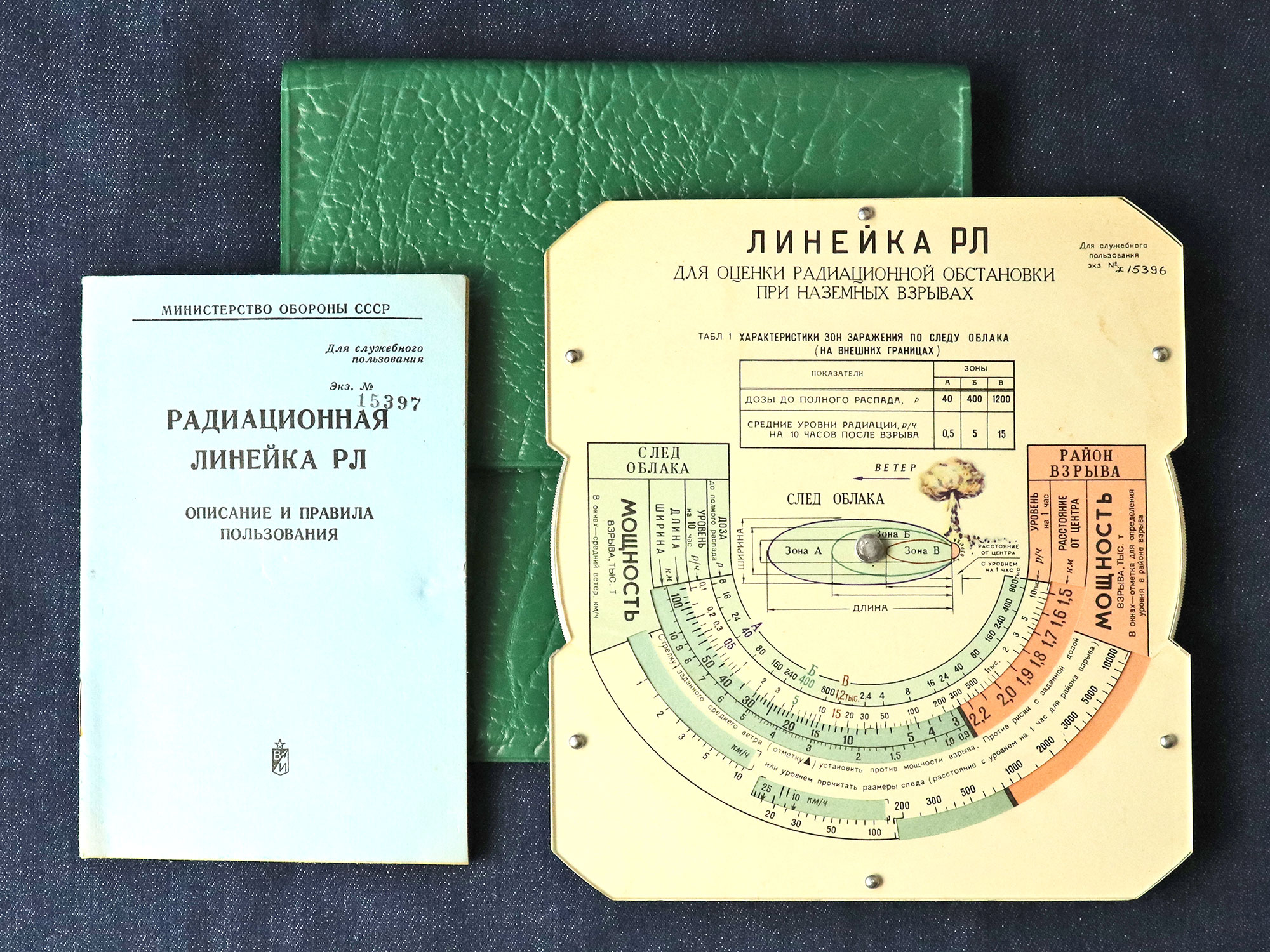
These devices are for calculating radiation dose around a nuclear blast – that is, figuring the danger to human beings in an area contaminated by radioactive fission products. The intensity of the radiation decreases with time, and the slide rules do the required calculation to account for this.
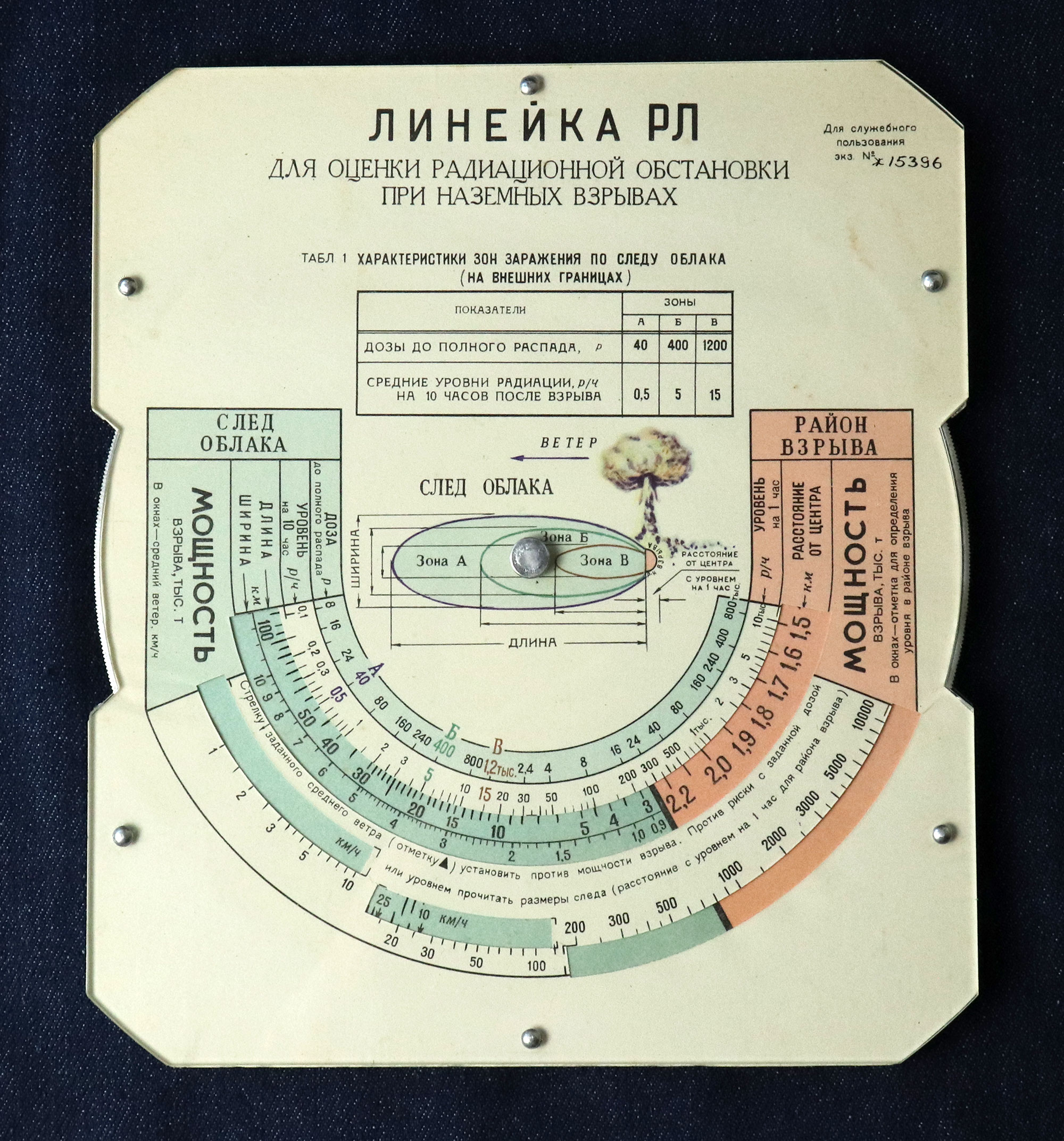
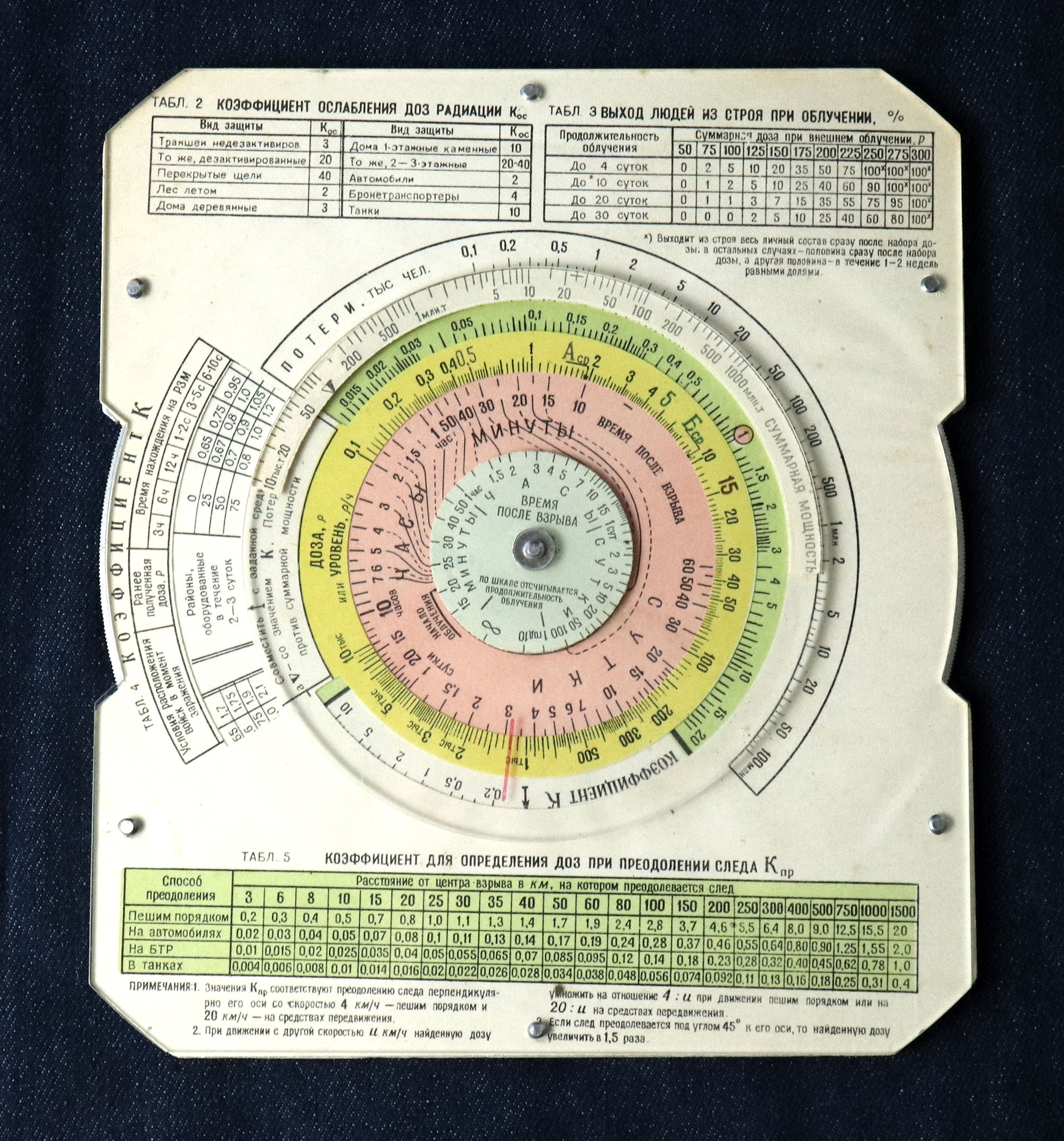
This large device (19.7 x 17.2 cm) was made for the USSR Ministry of Defense around 1970. It is quite well-made, with the paper scales glued on metal parts (fixed and rotating) that are sandwiched between two clear (Plexiglas?) outer layers. Its purpose is to calculate the radiation effects on soldiers in an area that has been subjected to a nuclear explosion, taking into effect time, protective effects of various houses and vehicles, etc. The instructions are chilling: there are examples (according to Google translation) of how to figure the fraction of your troops who will die in a given time, and with what distribution of severity they will be incapacitated by radiation sickness. All very scientific, to be sure.
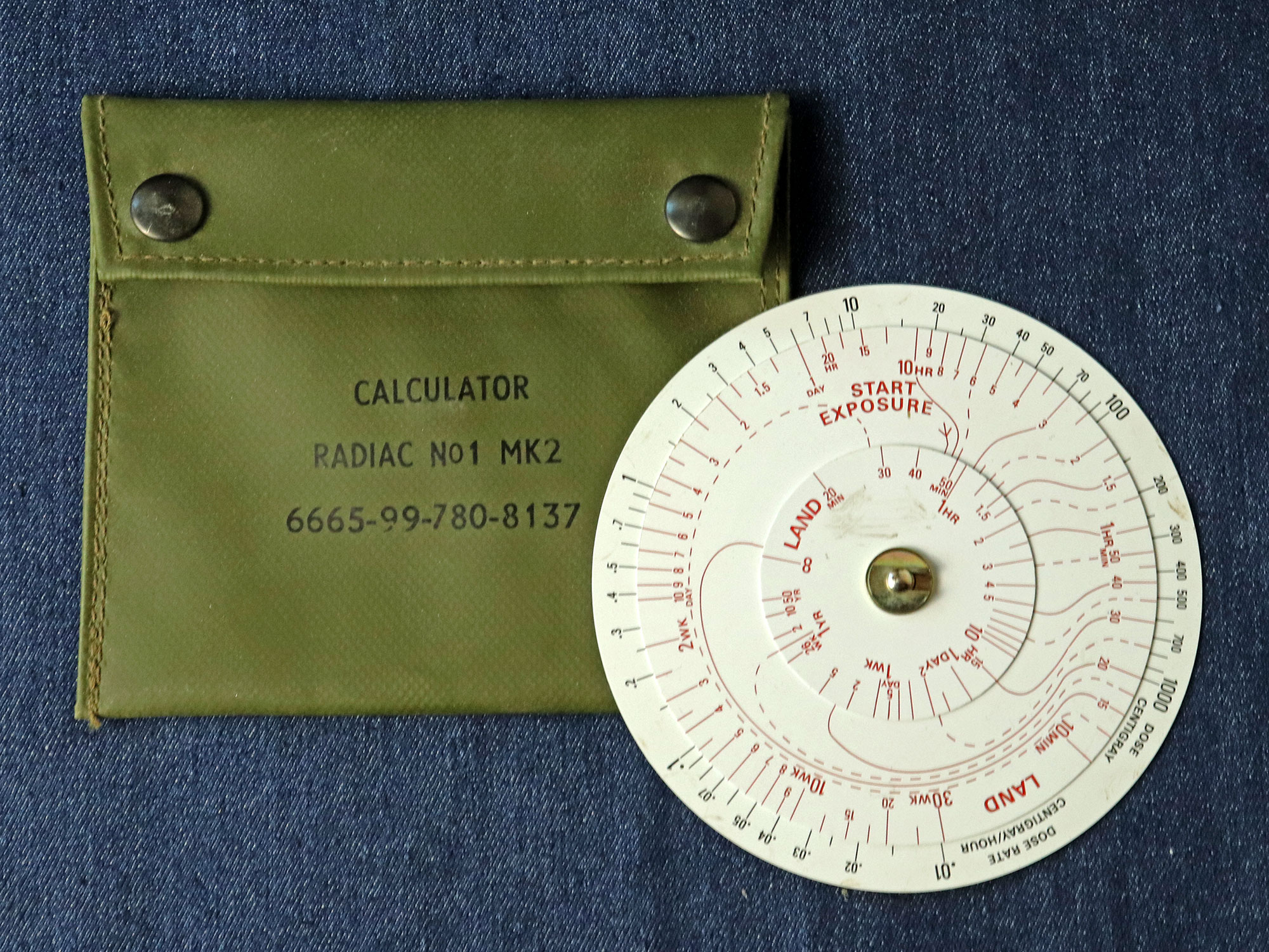
And here is the Radiac No. 1 Mk. 2 calculator, made by the English firm of Blundell Harling around the late 1950s. At 12.7 cm diameter (an exact 5 inches, showing its origin) it is far more compact than the Soviet device, and less ambitious in its functionality: given the measured exposure rate (in centigray/hr) at a given time after a nuclear explosion, it predicts the exposure rate at any other time.
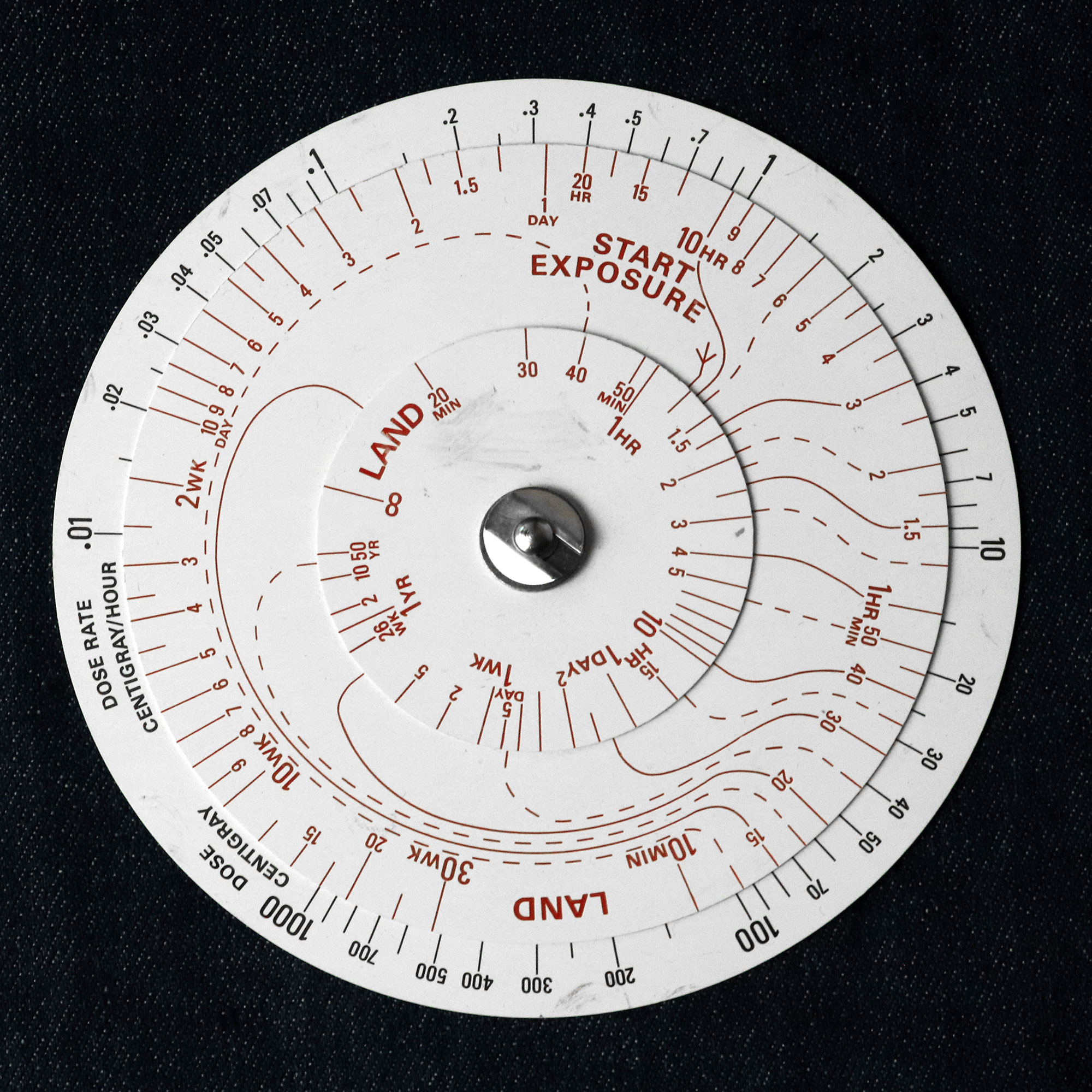
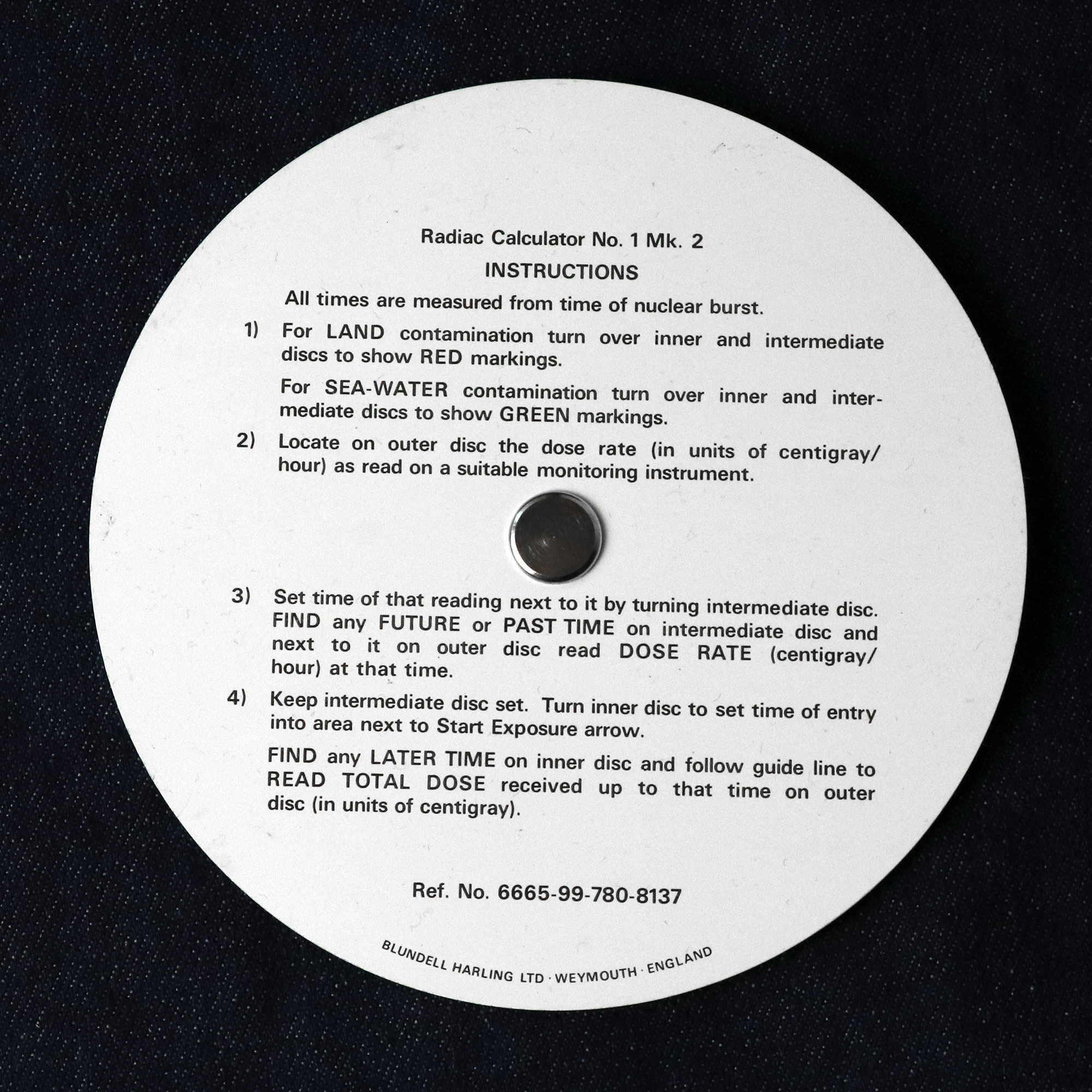
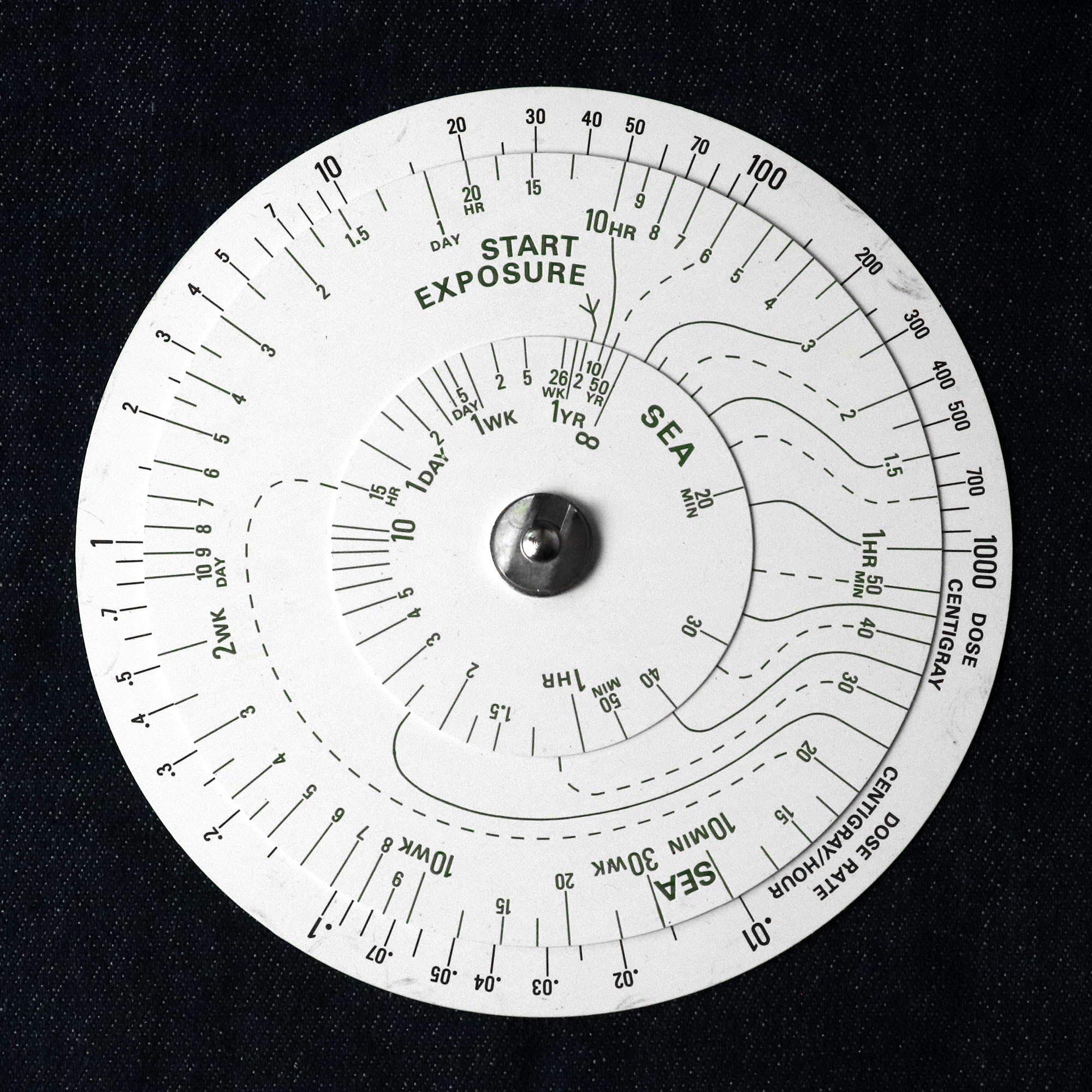
It also estimates the dose absorbed by people who are exposed for specified periods after the explosion. The back shows the simple instructions for use.
It is interesting to note that the two moving disks are reversible – you can remove the clip holding them to the pivot and turn them over. The other side does a similar calculation but for explosions blasted at sea rather than on land.
Both of the above slide rules come in practical flat cases, the Radiac’s having a definitely military look.
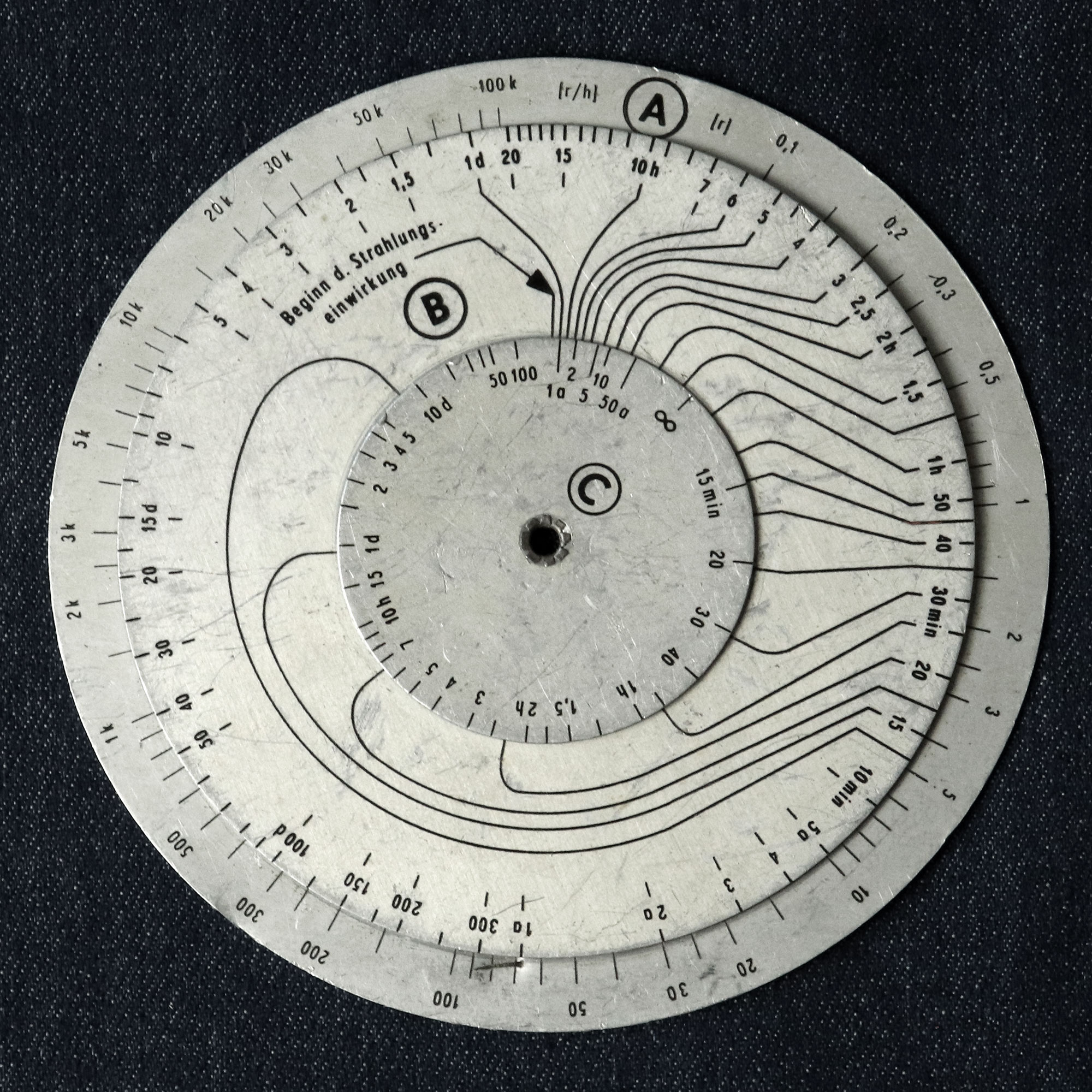
And here is another 5 inch metal slide rule of similar purpose marked in German, whose origin is unknown to me.
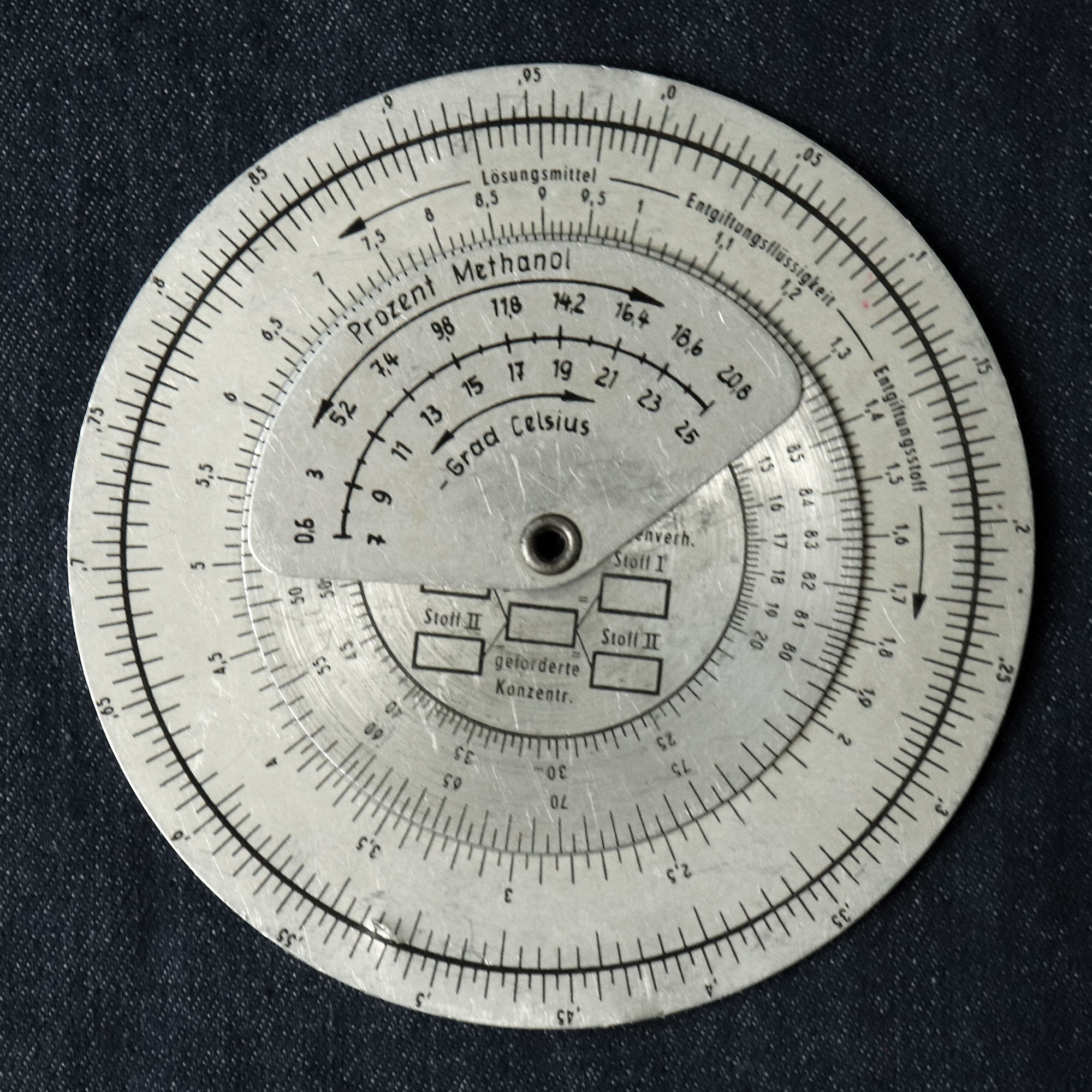
Oh well… at least we can console ourselves that these instruments have never had to be used in real action…
Exhibit provenance:
The Soviet device is an eBay find, whereas the other two were bought at a collectors’ meeting.
More info:
An article by Andries de Man that explains the math behind these devices.