
Sexton’s Omnimetre
Back in the day there were many highly precise slide rules. There were also some slide rules made of cardboard. But rarely did these two attributes coexist in a single device, as they do in Albert Sexton’s Omnimetre.
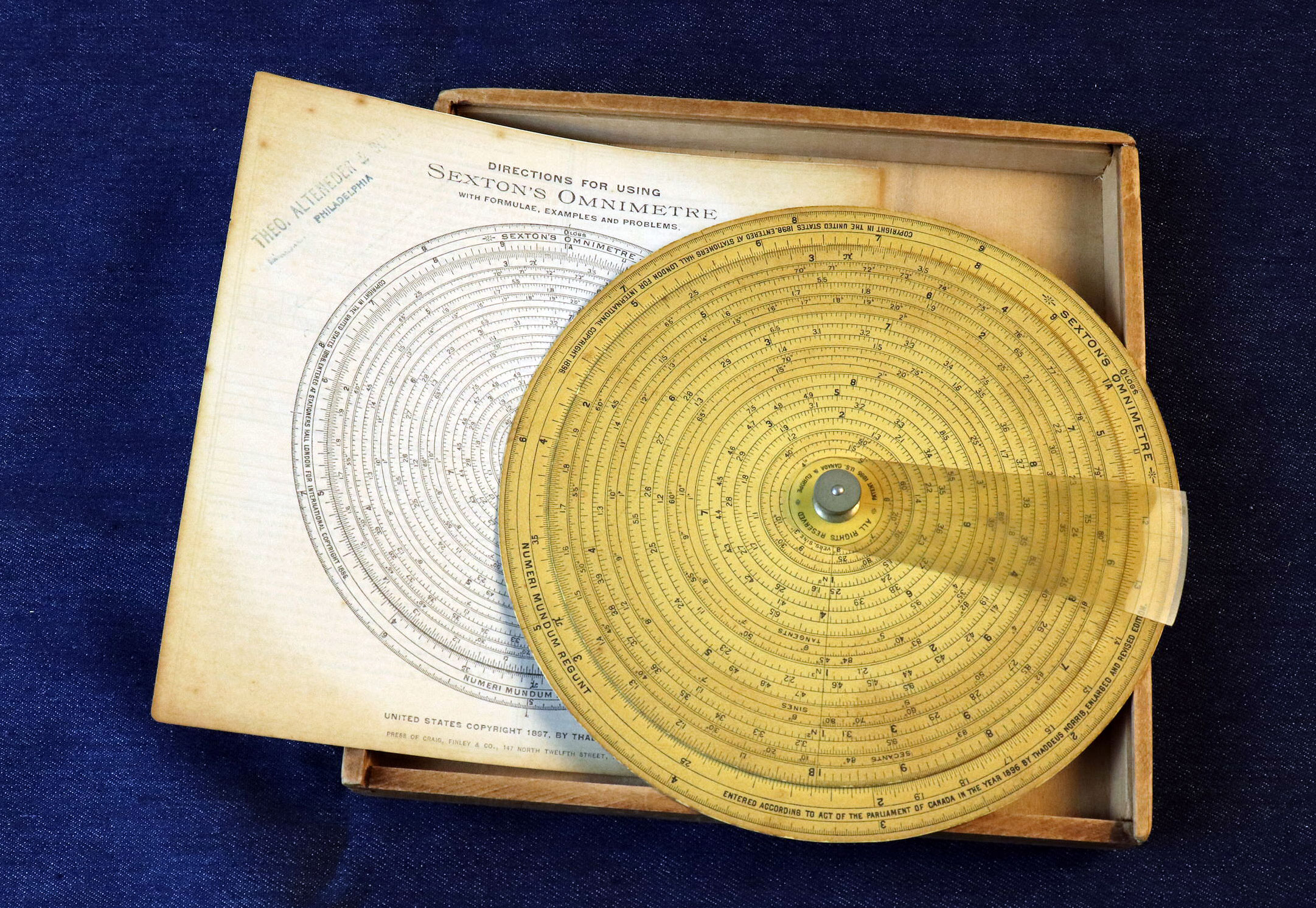
This impressively intricate device consists of a bottom disk 18.1 cm in diameter, with a second disk, 15.4 cm across, pivoted at the center with a metal screw and nut. A celluloid cursor with a single radial hairline rotates around the same pivot. The back of the larger bottom disk has three cutouts that facilitate grabbing the top disk to rotate it relative to the bottom one.
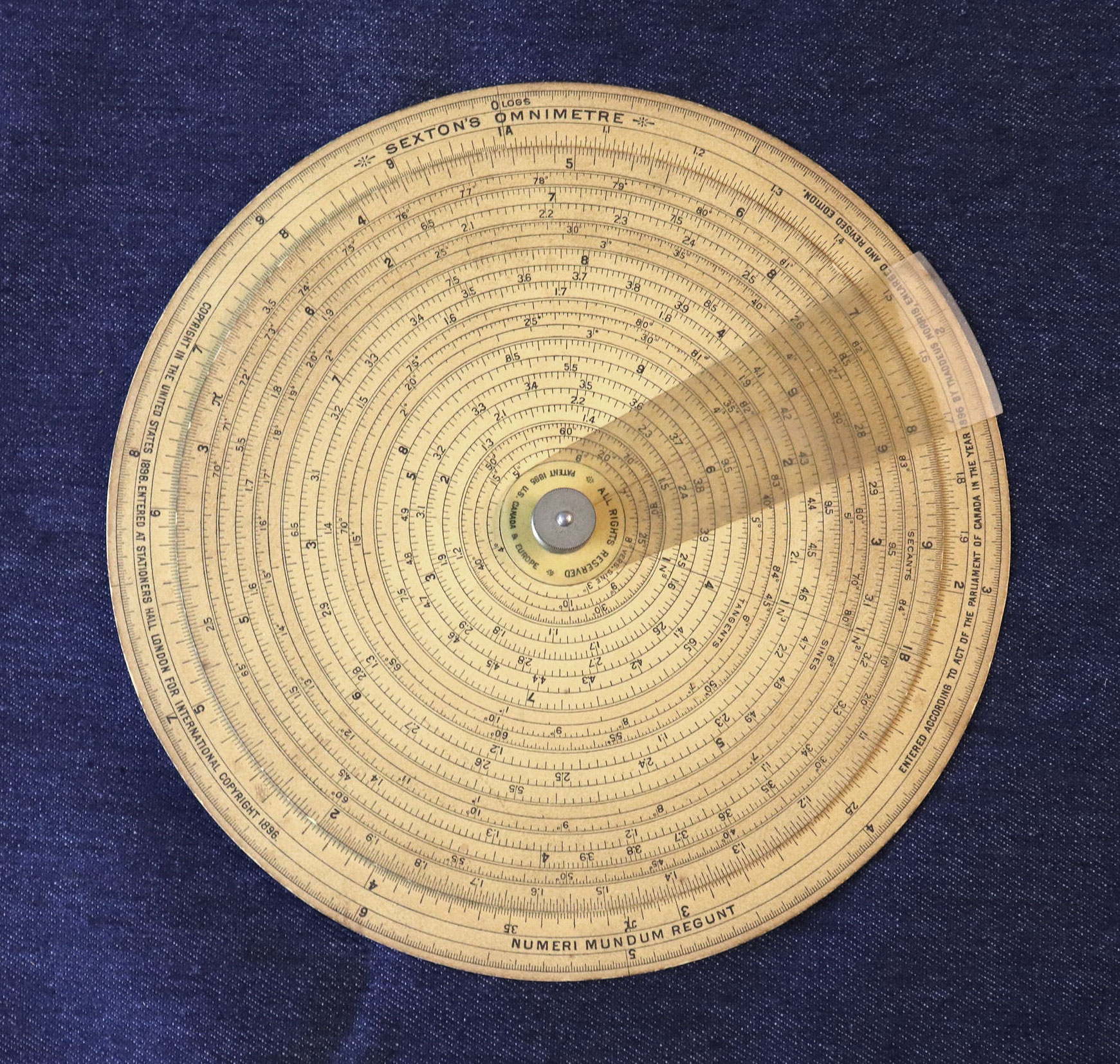
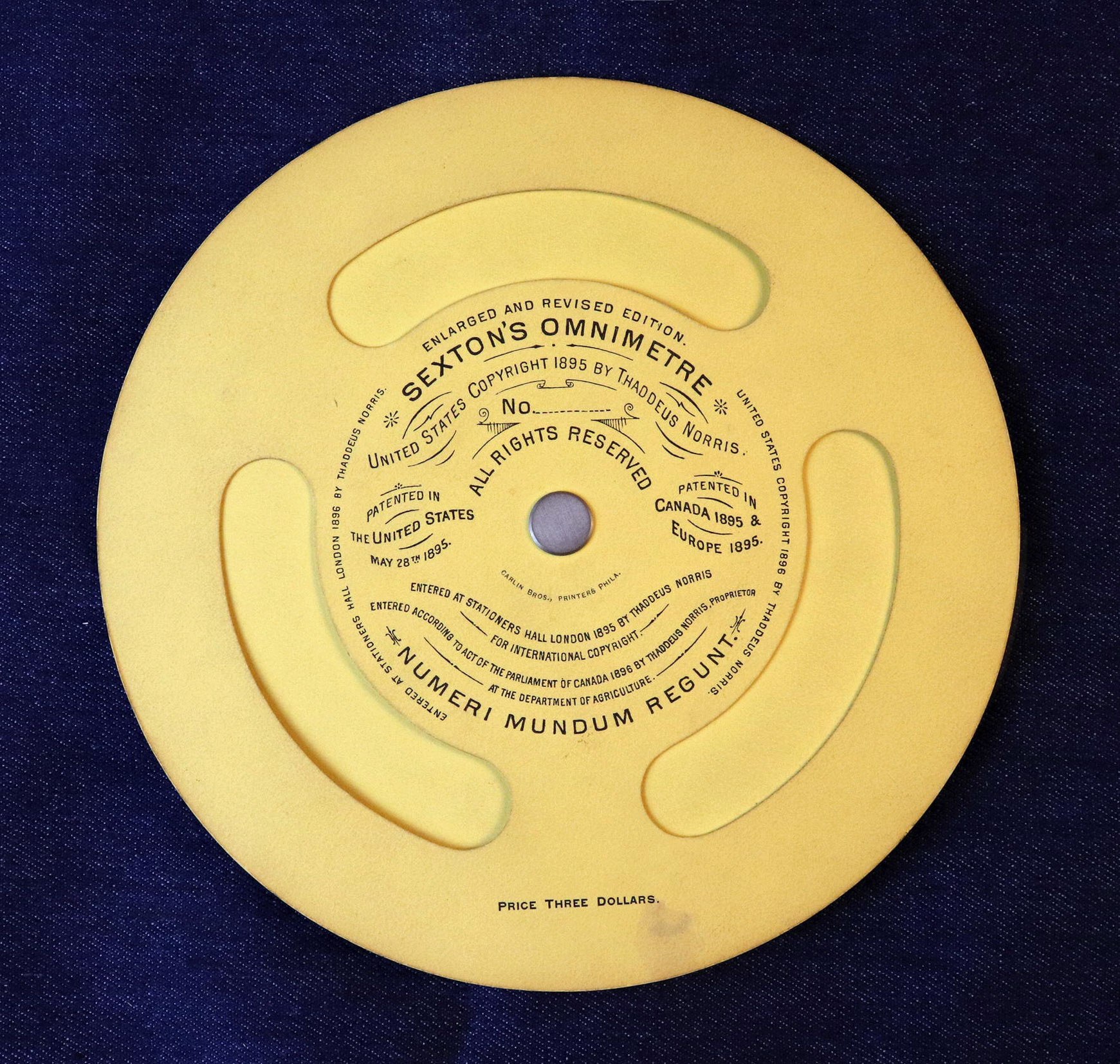
The outer (bottom) disk has two scales: a linear log scale, and a single cycle logarithmic scale. The inner disk carries a similar single cycle logarithmic scale, followed by scales for secants, squares, sines, cubes, tangents, fifth powers, and versed sines. That’s a lot of functions, and the main multiplication/division scales have a scale length of some 48 cm, making this a serious slide rule indeed.
Albert Sexton (ca. 1840 – ca. 1915), an engineer from Philadelphia, patented this device in 1895. His intent was to produce a versatile yet relatively inexpensive slide rule, and in this he succeeded nicely. The name Omnimetre and the motto Numeri Mundum Regunt (numbers rule the world) were contributed by an early user, an engineer by the name of Arthur Marichal. The instrument was manufactured by the Philadelphia firm of Theodore Alteneder and Sons, whose name is stamped on the instructions manual. It was never a best seller, but it continued to be made and used at least until WW2.
The Omnimetre comes in a wooden box with a sliding lid, which also holds an instruction manual printed as a fanfold brochure with 8 pages. This goes beyond mere instructions to provide numerous examples, conversion factors, and usage tips.
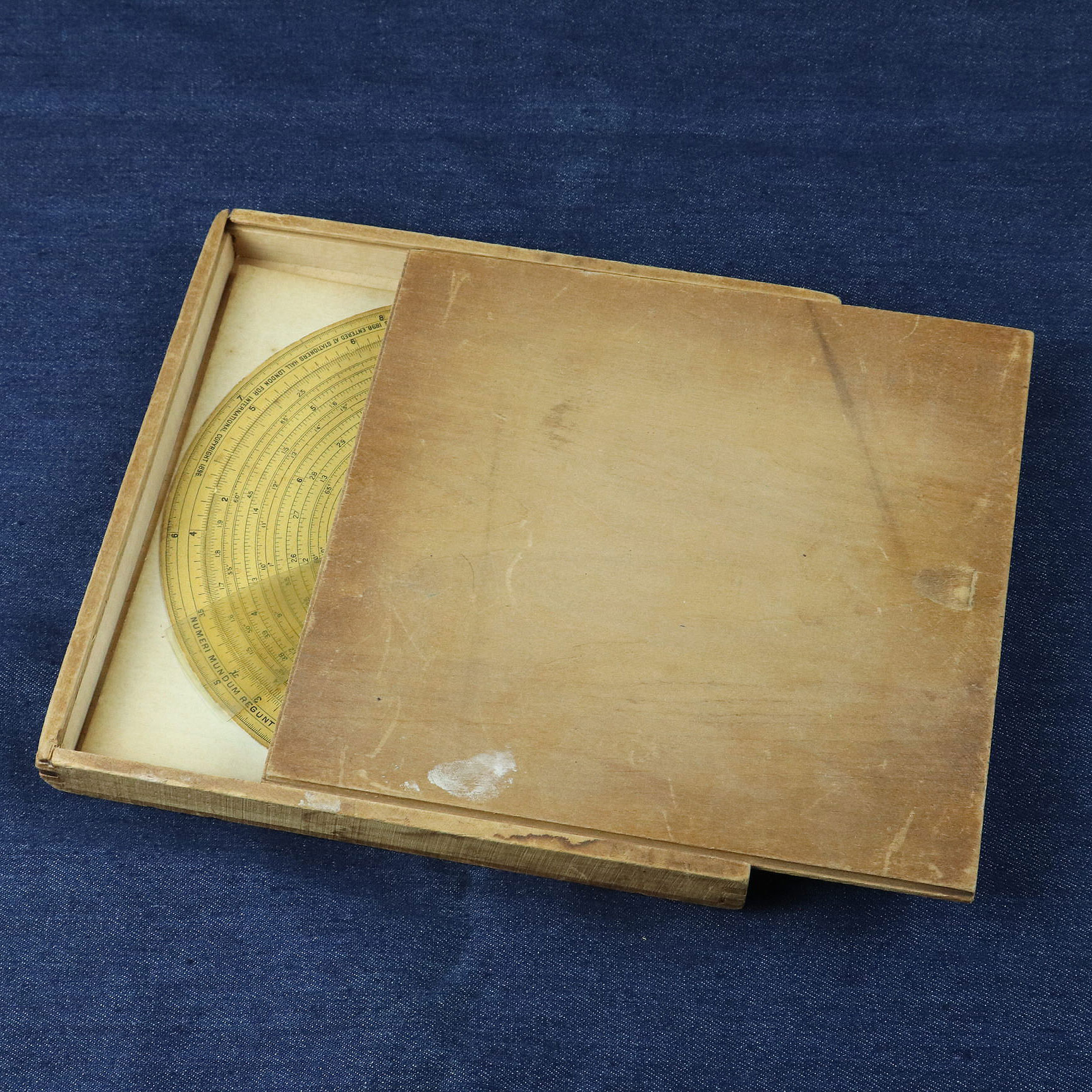
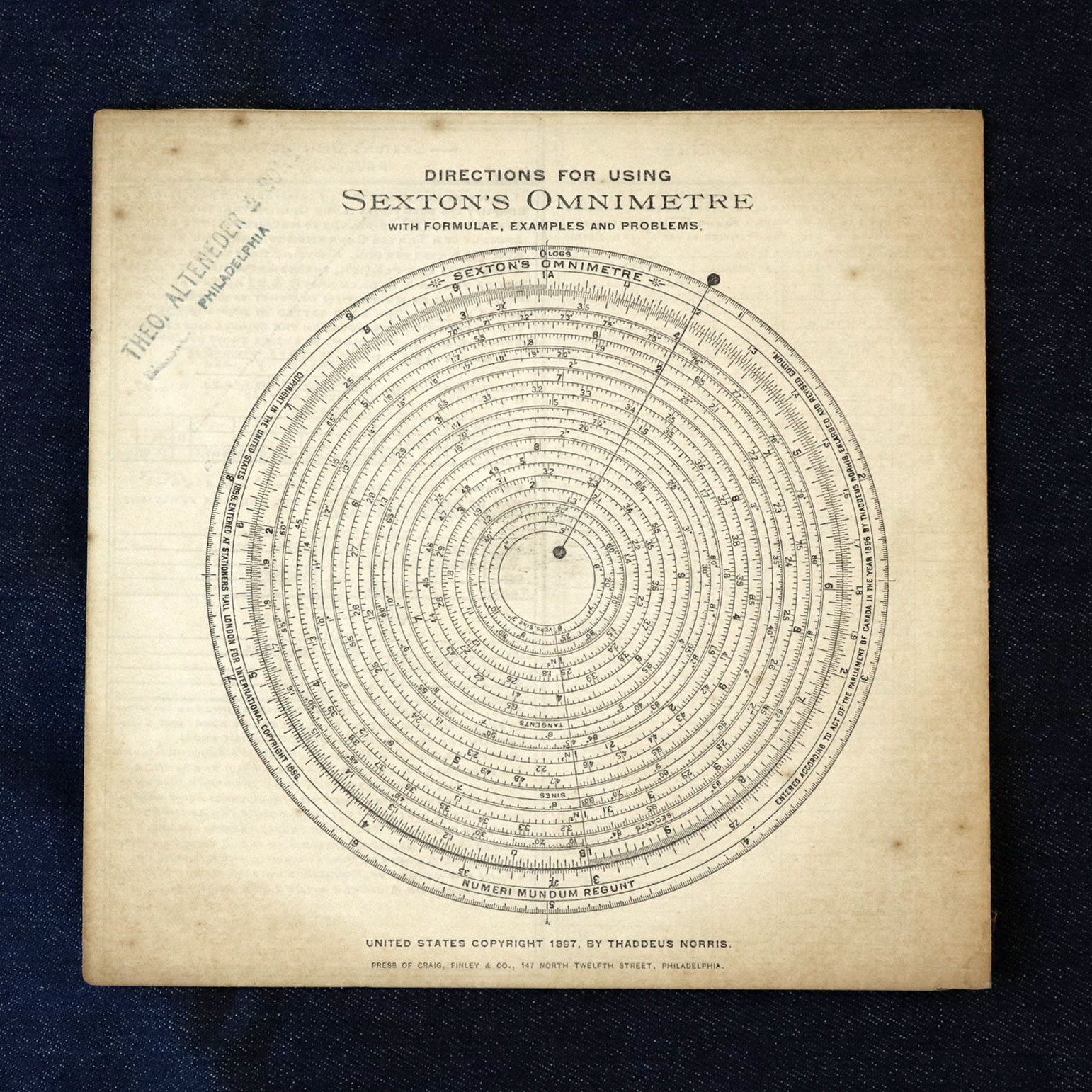
Exhibit provenance:
I purchased this slide rule at the Oughtred Society’s auction of items from the Richard Smith Hughes collection.
More info:
- Here is a scan of the instruction manual
- Computing devices, mathematics education and mathematics: Sexton’s omnimetre in its time, by Peggy Aldrich Kidwell.
Thank you Nathan. Your summary is much more complete and much more readable than the one provided by the Smithsonian.
One tries! 🙂