
Lately the electrical system in my home got in the habit of shutting down unexpectedly. This did not happen by some faulty appliance tripping a fuse; we soon found that it was the Ground Fault Circuit Interrupter (GFCI, that anti-electrocution safety device) that was deciding to trip, but when we reset it the power stayed on. Weird!
I called in an electrician, and he immediately asked: do you have surge protectors in the apartment? I said I do, so what? So he showed me what. He whipped out a “Megger” – that’s a Megohm meter, a test device that shows the electrical resistance in a circuit. He used it to measure the isolation between the Live and Ground in the apartment, and showed me it was at 0.05 Megohm instead of 1 Megohm or higher as it should have been. We then started to unplug stuff and see the impact; and to be sure – once I removed the four surge protectors I had on some outlets, the resistance drop was gone.
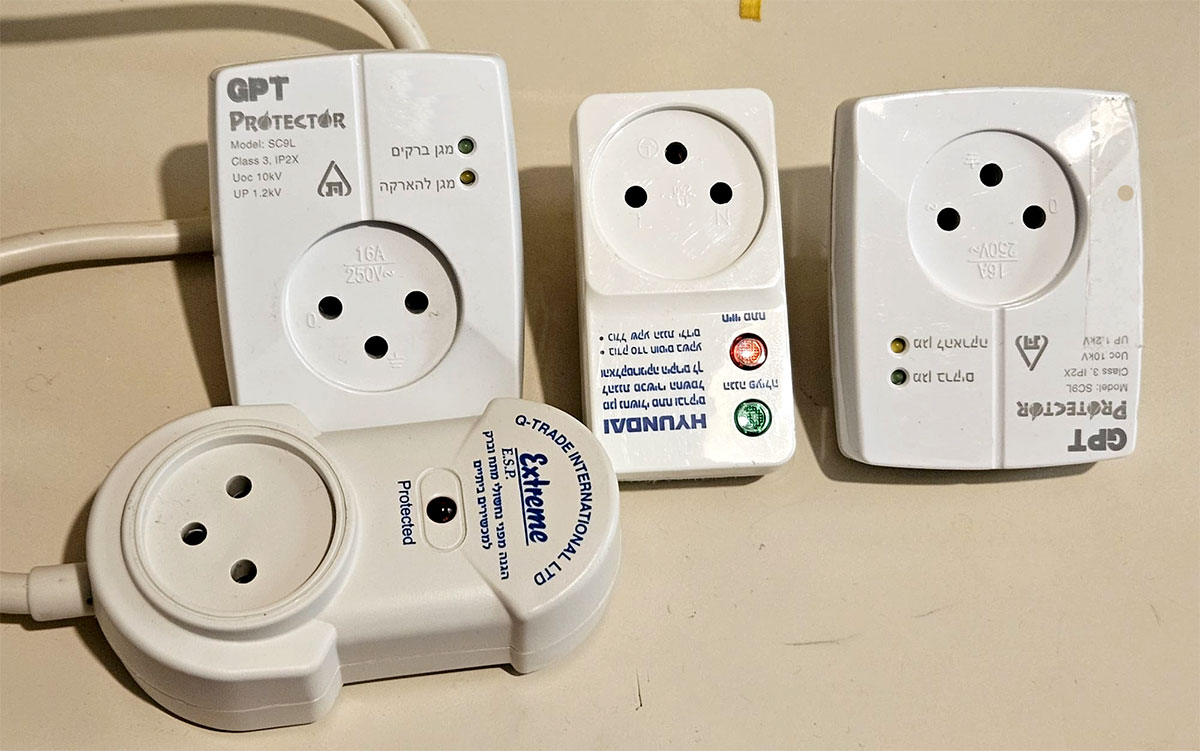
So then he told me that he’s seen it countless times: these units have a very small leakage path, so a trickle current flows through them. Usually it is not enough to trip the GFCI, but with multiple units it can get close, so even a small blip can trip it.
Now , I’ve always known that these devices offer only minimal protection; I wasn’t expecting them to fend off a lightning strike. But I installed then over the years because I said to myself, “at least it can do no harm”.
So I thought I’d share: yes they can!