
These days computing is done on silicon chips, and before that there were vacuum tubes, and before those there were gear systems… but the earliest computers used beads, and they were in use far longer than any other kind of computer. Time we discussed the trusty old abacus.
The original abacus was an improvement of the counting board, which used pebbles or tokens placed on lines scribed on a board. We have some examples of a Roman abacus, but modern ones derive from three origins – in China, Japan and Russia – and I have examples of all three in my collection.
The Chinese Suanpan
Here are two examples of the Chinese suanpan, the oldest of the three, which was developed in China in about the 12th century.
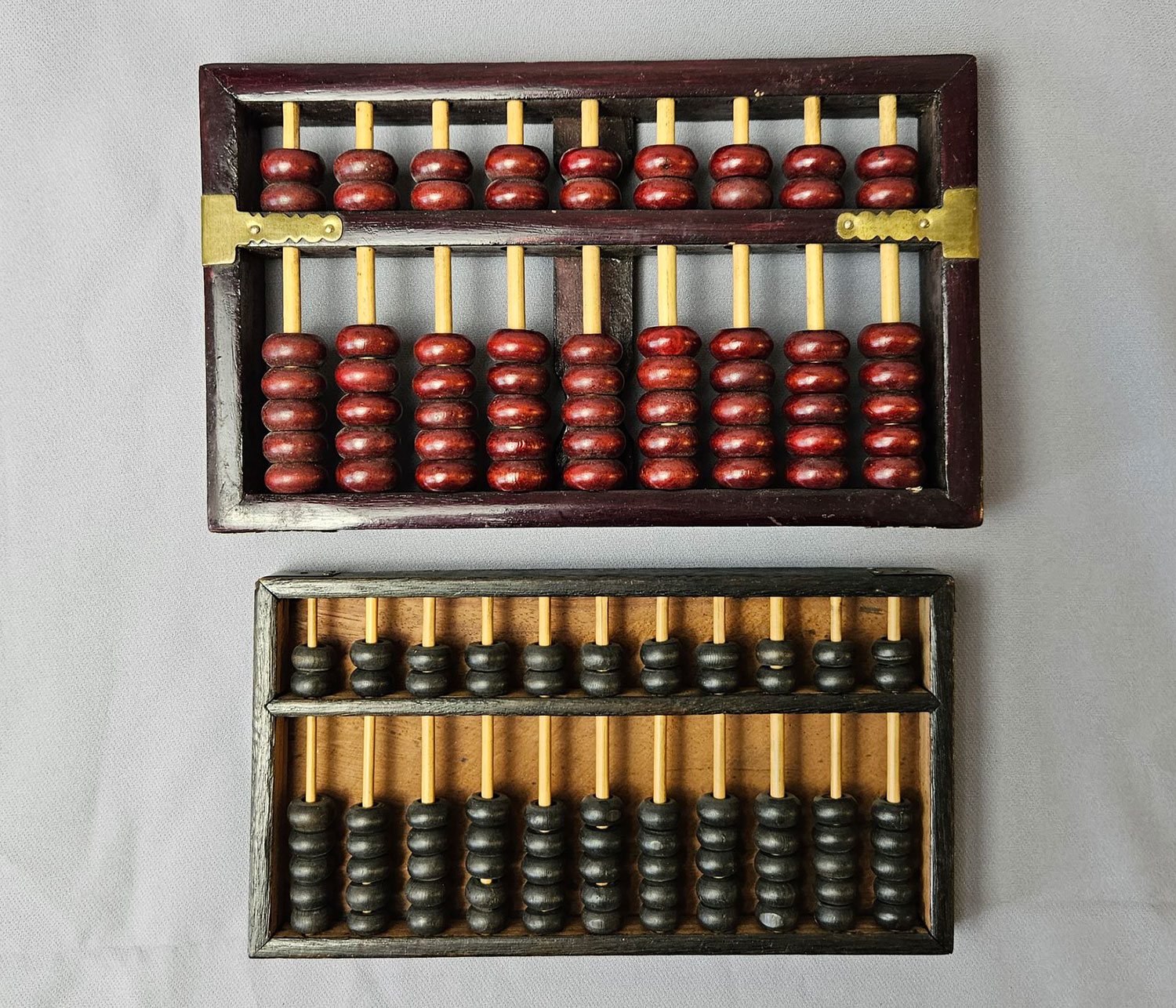
Here is how you represent numbers on the suanpan:
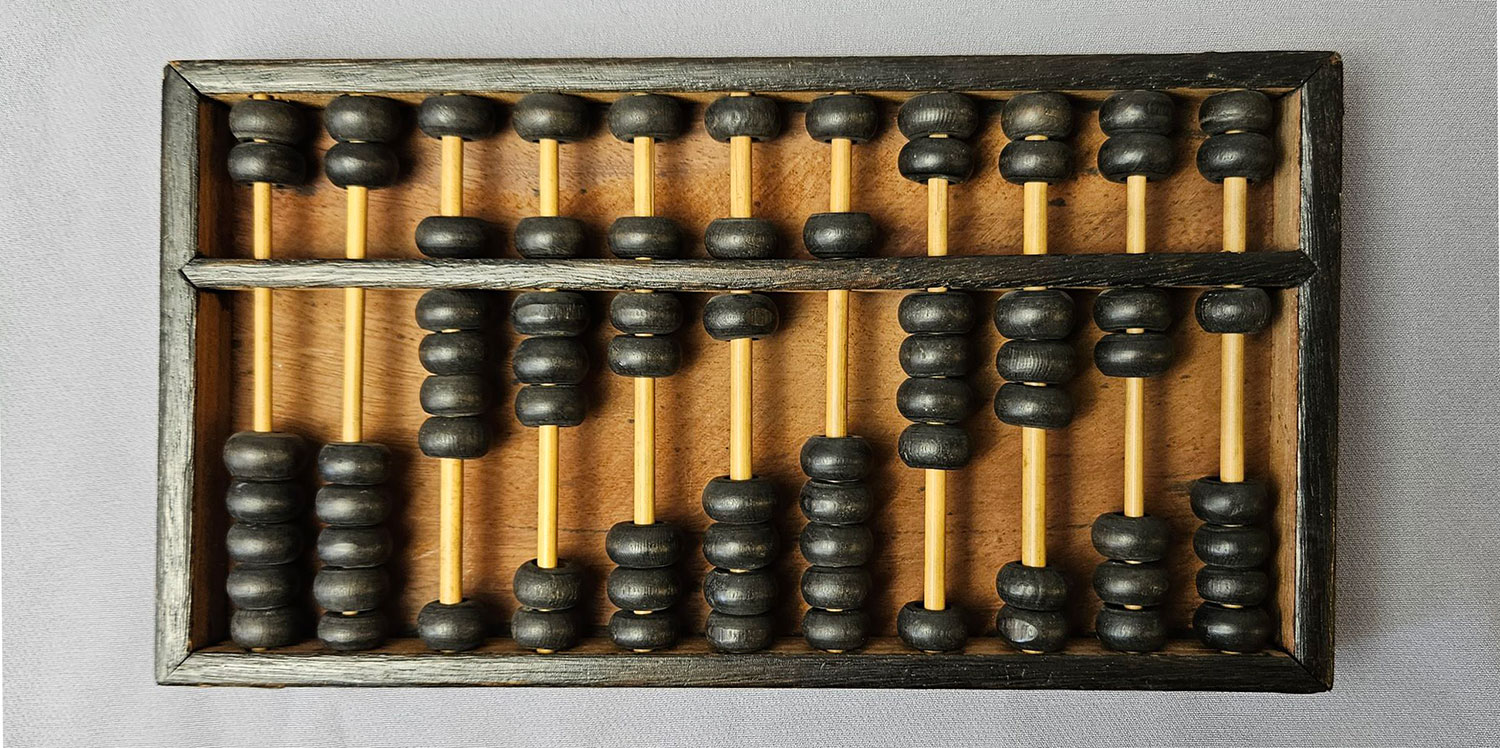
The abacus in this photo is set at 00987654321. The beads are in two sections, “Heaven” above and “Earth” below. The zero state is with all beads away from the central bar; each Earth bead moved to the bar represents 1, and each Heaven bead represents 5. To add numbers you manipulate the beads and make the required carry operations from rod to rod, which a practiced user could no doubt do with their eyes closed.
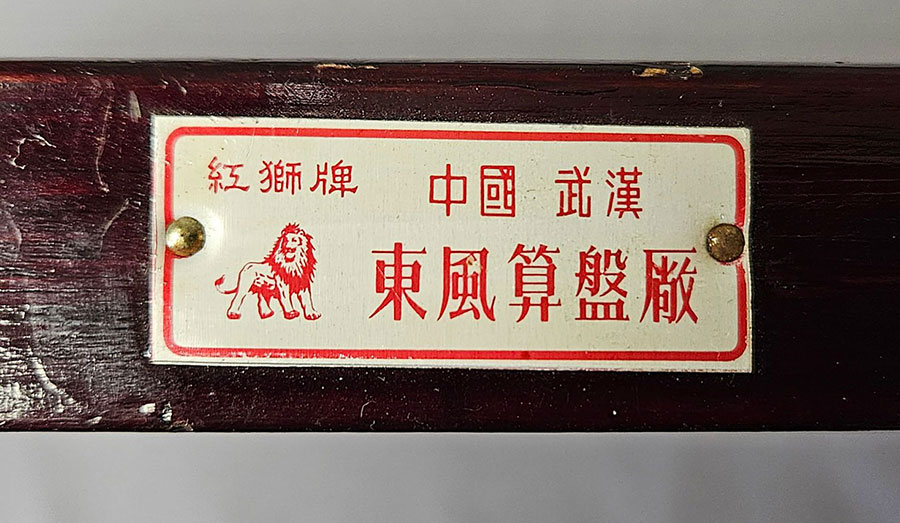
Incidentally, the suanpan with the reddish beads has this little tag on its frame, and it says “Red Lion brand, Dongfeng abacus factory, Wuhan, China”. Yep… THAT Wuhan.
The Japanese Soroban
The soroban was derived from the suanpan by the 16th century. It comes in many sizes… here are two of them.
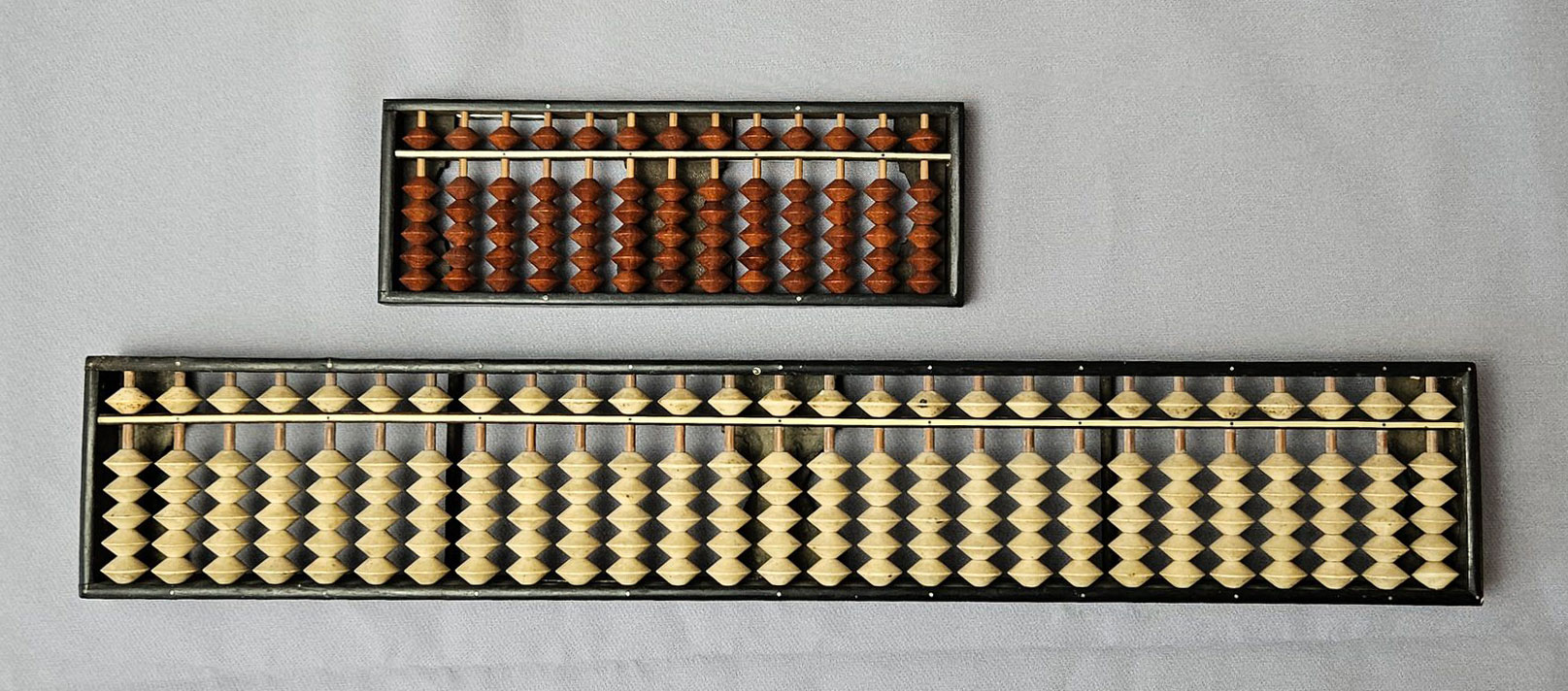
Number representation is similar to the suanpan. The soroban in the next photo is set to 0000987654321.
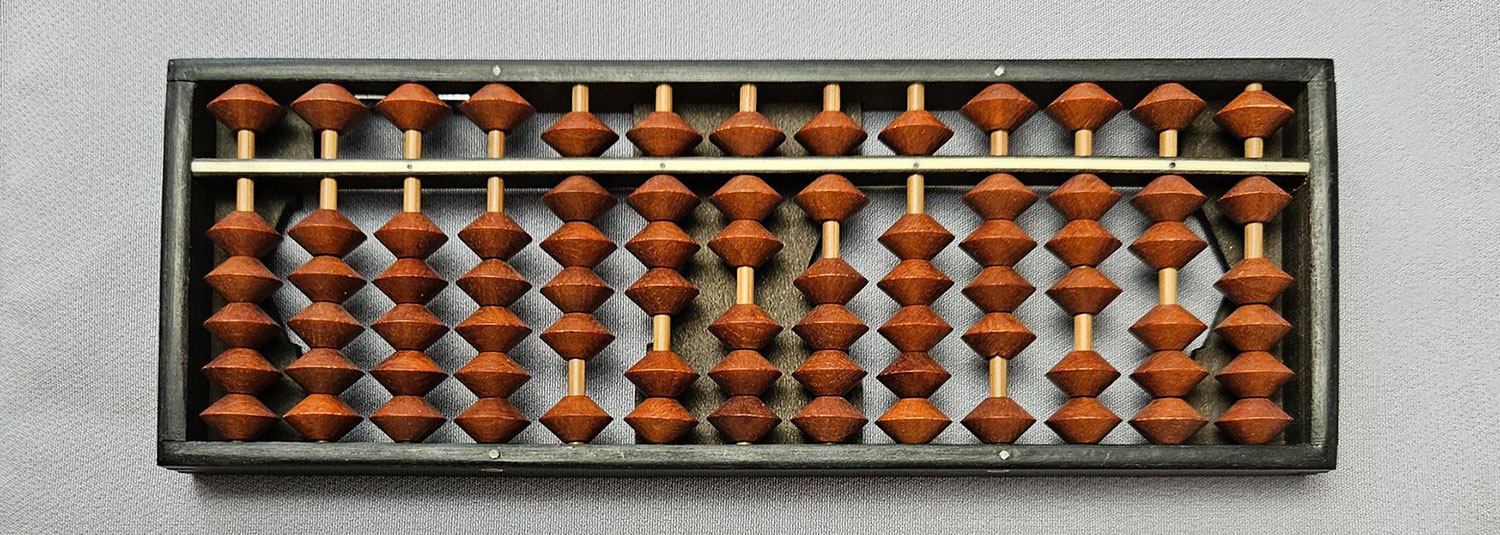
Of all the abacuses (or is it abaci?) out there, the soroban had the highest craftsmanship and precision in manufacture. The beads slide with minimal friction and need to move shorter distances, making the device more compact and faster than the other forms.
Both the suanpan and the soroban can have different bead configurations. The lower part can have four or five beads, and the upper one or two. In principle a 4+1 configuration suffices for calculation, and in the 20th century it became fairly standard; but some operation techniques can benefit from the extra beads to gain speed and ease of use.
The Russian Schoty
The schoty, which goes back to the 17th century, is Russia’s contribution to the abacus domain. Here are two examples:
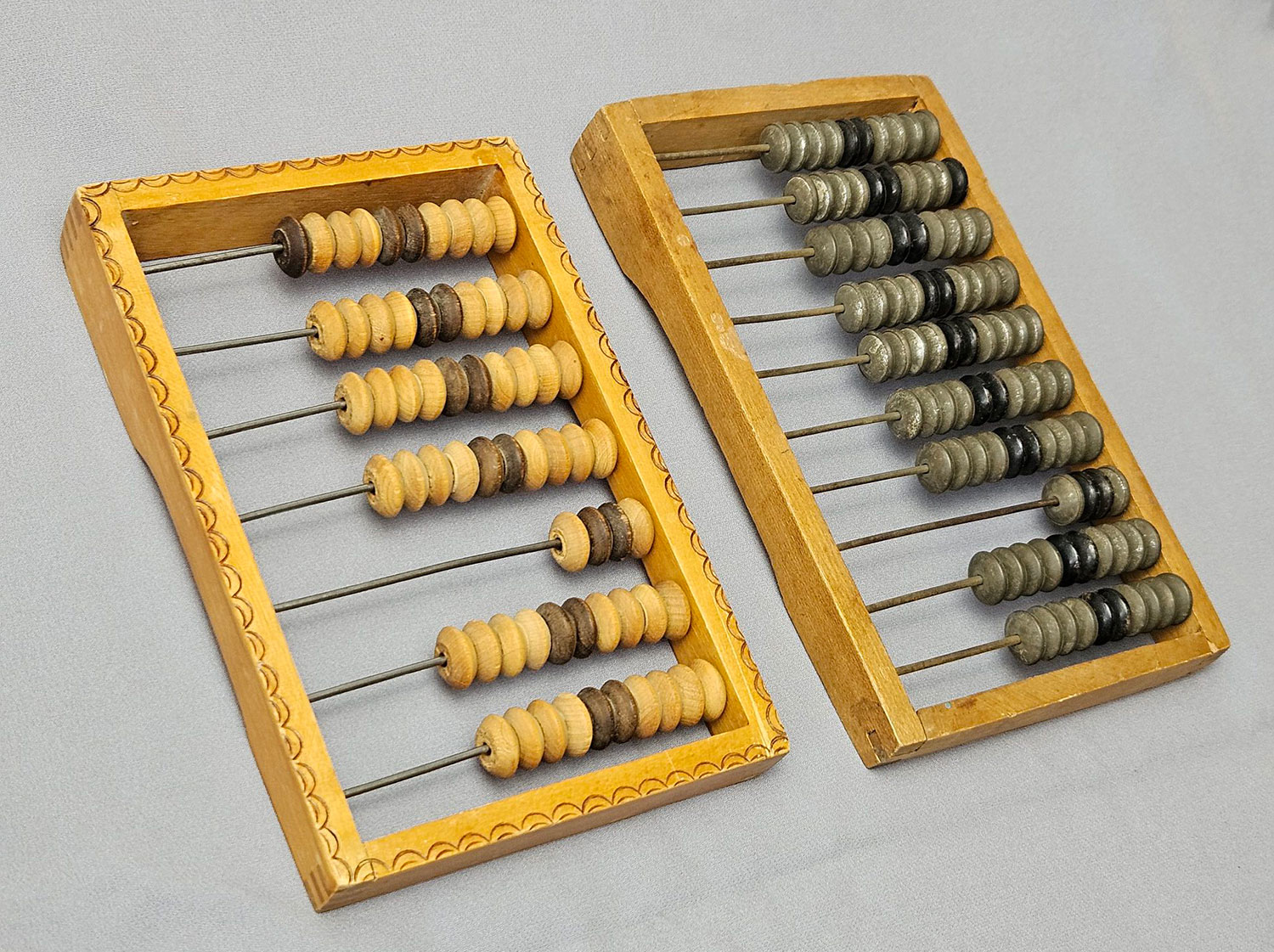
The Schoty was independently developed in Russia from European counting boards, and follows a different design than the Chinese and Japanese versions: it uses 10 beads per position, inspired by the fingers of two juxtaposed hands, and it has the beads running left to right instead of vertically.
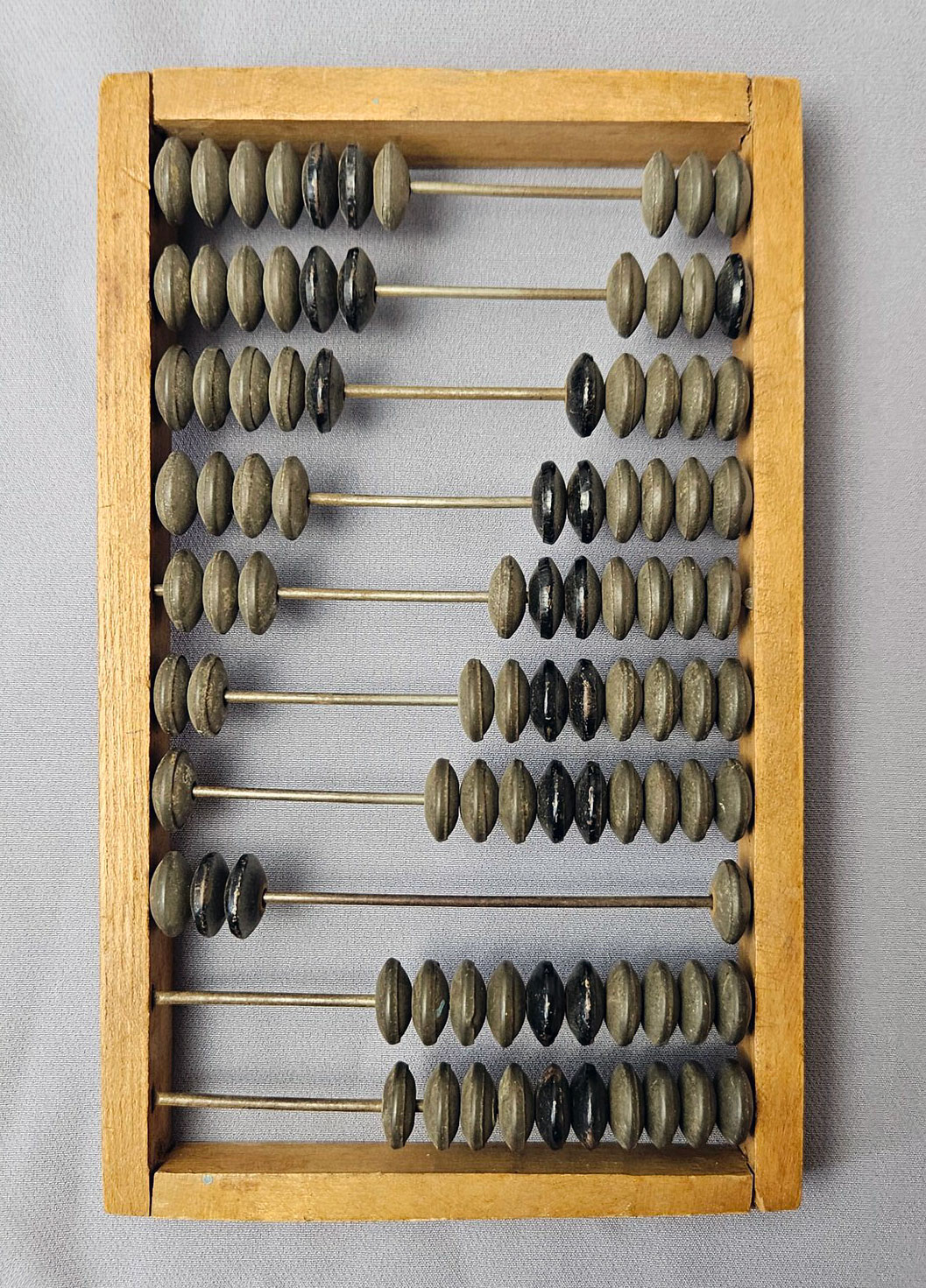
The encoding of numbers here is simpler than in the Soroban: the photo shows the device representing 1234567 and 3/4 rubles. The Schoty is optimized for commercial calculations: the row with 4 beads represents the four quarter-ruble coins that make up one ruble, and the two decimal rows under it count 10-kopeck and 1-kopeck increments (a kopeck is 1/100 of a ruble).
These three abacus types were produced over the centuries by the millions, and used very extensively in many countries well into the late 20th century. Their use was taught in schools in Japan and in the Soviet Union, and was a required skill for many public service jobs; I can imagine skilled users churning through arithmetic problems with their fingers flying over the beads (check this impressive video of Japanese children). They were used by merchants and storekeepers every day. And they were effective – one of the early digital computers in the fifties was pitted against a soroban operator, and the latter won – on speed!
And when it came time in the 1970s for the beads to make way for the electronic calculator, Sharp corporation introduced the Sorocal – a hybrid of electronics and beads, meant to encourage Japan’s storekeepers to make the switch.
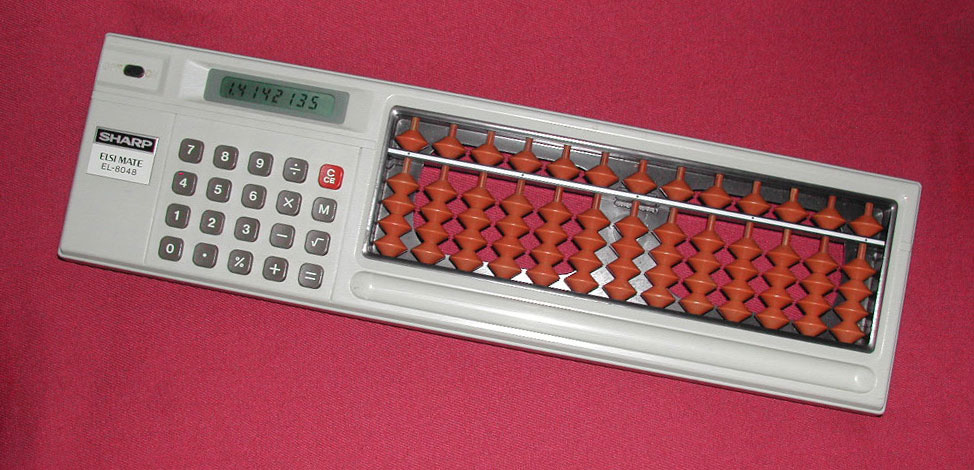
Exhibit provenance:
Various flea markets… these items show up there regularly.
More info:
- A detailed video explaining the use of the Soroban (it’s less trivial than you’d think).
- Krüger’s calculating pencil case, an abacus for school children from 1909.
- And here is a delightfully cheerful advertising jingle from Tomoe Soroban, a leading manufacturer: