
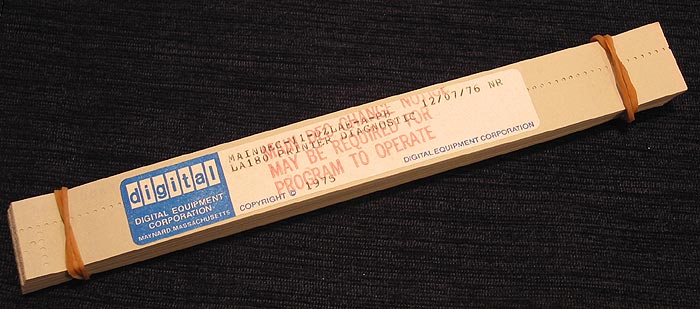
Here we have a few yards of software, neatly folded in a fanfold. This was the method of choice to distribute software for minicomputers in the 70’s.
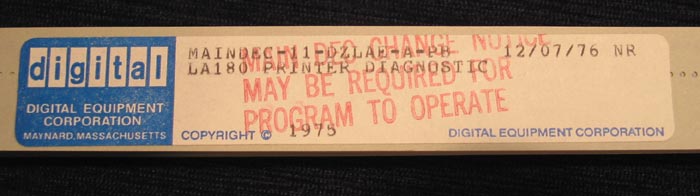
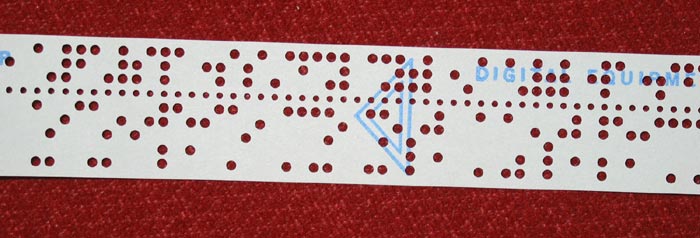
Below are some closeup views. The actual software code resided in the holes; each vertical line of 8 large holes represented one character (byte). The smaller holes fit a sprocket on the tape reader, which pulled the tape when it was being fed into the computer.
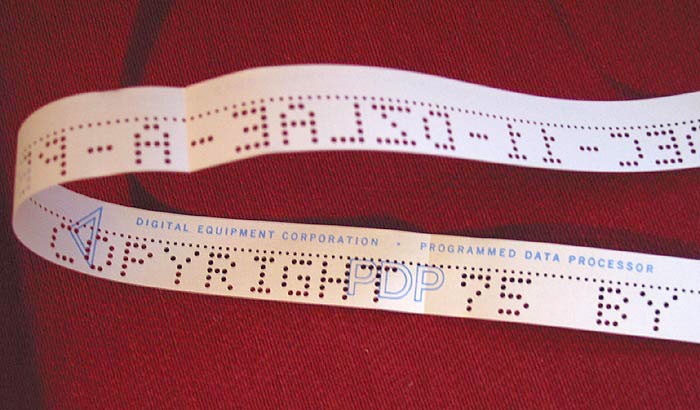
The photo below shows the tricks you could play with these tapes – here we have a copyright notice punched in human-readable form.
As with any software, this medium could be, and was, copied. This was done with a Paper Tape Punch – a standard item in any computer lab (PDP computers were not something you had at home, remember). The copied tape would usually come out in a roll, not a neat fanfold like DEC’s; an example, from the lab I was a student in, is shown in the next photo. Copy protection had not been invented yet…
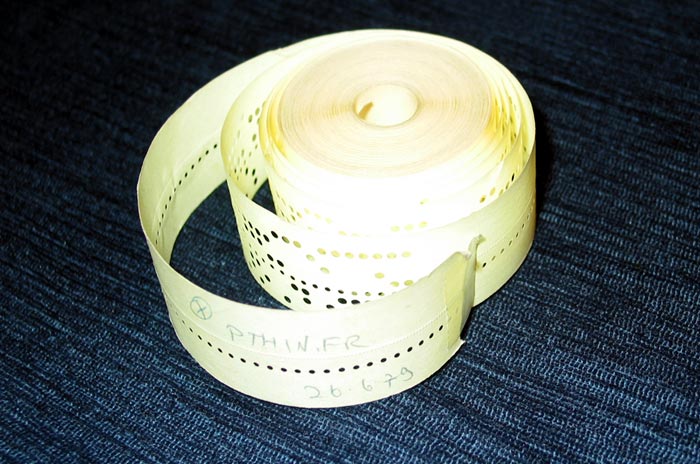
Exhibit provenance:
I bought this one on eBay, from a vendor specializing in DEC products. It came with a few pages of documentation, printed on paper. For a device supposed to make us paperless, the minicomputer certainly consumed a lot of trees!