
One of the little treasures my Grandmother left us is a boxed set of the sketches (one hesitates to call them cartoons) of Giuseppe Novello (1897-1988). The sketches originally appeared as weekly newspaper cartoons from the 20’s to the height of the cold war. They portray Italian life during those turbulent decades of European history… but rather than show world shaking events, they expose the daily realities of the life of middle class society, with all the little joys and sorrows, the hardships, and the dislocations caused by the relentless march of history. Novello does this through the medium of the cartoon, and he does it with a piercing perception, which one could call ruthless if it weren’t for its deep underlying humanity.
Take this one: an old man sits alone in a bare room, his modest circumstances merely hinted at by the stove in the back, and a servant holding a dish of meat says to him “The horse is ready, your highness”.
CHANGING TIMES
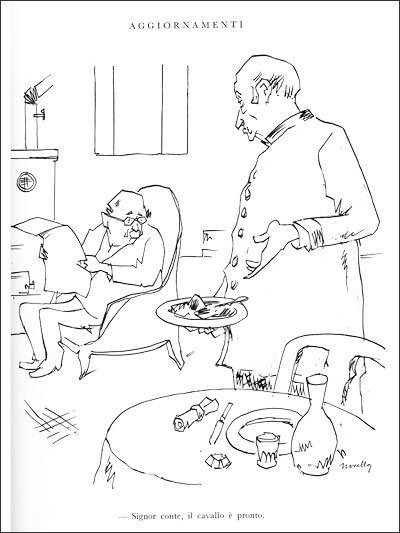
This is quintessential Novello: a sweeping historical change in European society is captured in one man’s decline; which in turn is presented poignantly through a single mundane remark.
Shelley’s Ozymandias does a grander job of depicting fallen greatness; but his Ramesses is distant and alien. The sad old count we see here is very human, and one can’t help but feel sorry for his downfall from proudly riding horses to barely affording their meat.
There are five books in the box, published from 1934 to 1967: Il signore di buona famiglia (“The well-bred Gentleman”), Che cosa dirà la gente? (“Whatever will people say?”), Dunque dicevamo (“So, we were saying”), Sempre più difficile (“Ever more difficult”), and Resti fra noi (“Let it stay between us”).
The names themselves evoke the middle class that is their main subject, with their daily struggle to cope with a changing world becoming “ever more difficult”, while trying to keep up with the Joneses (or the Bianchis), avoid being gossiped about while doing it unto others, and trying to maintain some dignity in the framework of the (often ridiculous) social norms.
A recurring theme in this collection is Change: change in society, which for Novello means more dislocation than progress; change in the life of individuals as they grow old; and the combination of both: growing old while the world around one changes too fast for comfort.
For example:
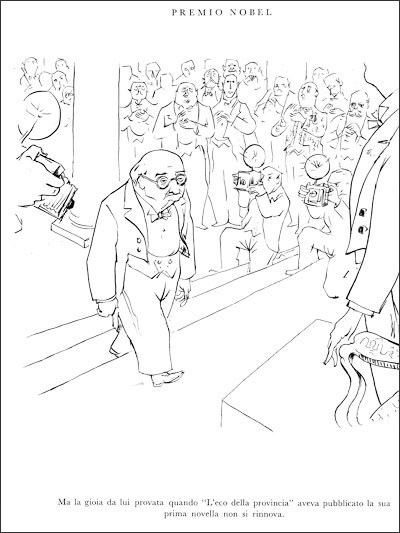
NOBEL PRIZE
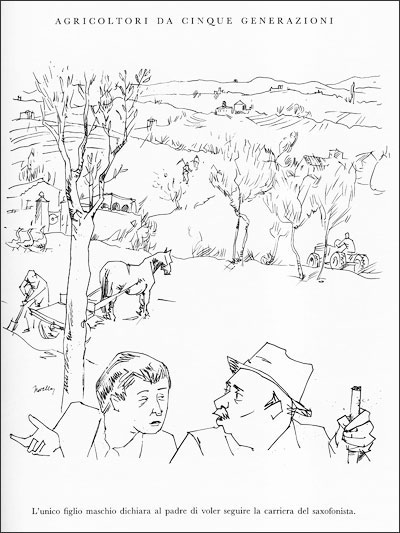
The landscape in the following drawing is very Italian, but the tragedy it captures has swept farmers in many parts of the world in the 20th century: the sudden obsolescence of the old agrarian way of life has left the older generation of farmers stranded in a vanishing lifestyle while their children leave for the cities.
FARMERS FOR FIVE GENERATIONS
Technological progress can be exciting…
(This was before every kid in the family had a cellular phone)
THE FAMILY THAT HAD A TELEPHONE INSTALLED TODAY
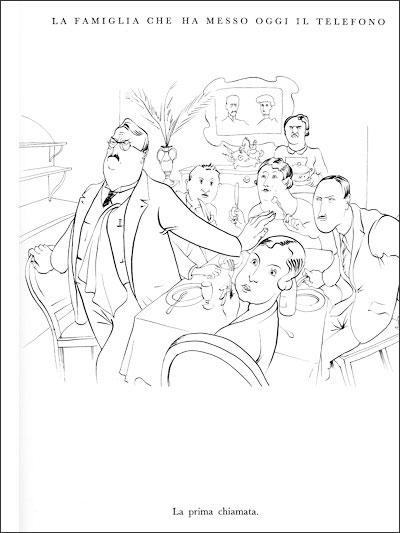
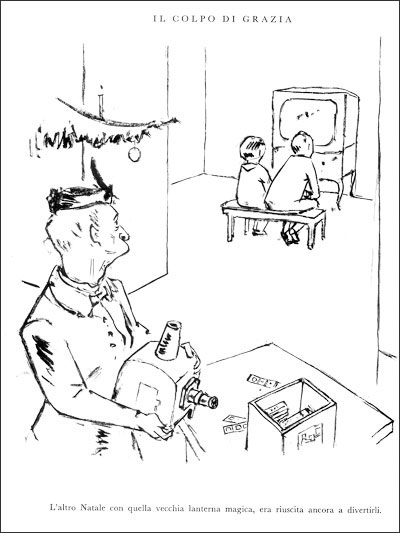
…but sometimes the new technology leaves victims behind.
THE COUP DE GRÂCE
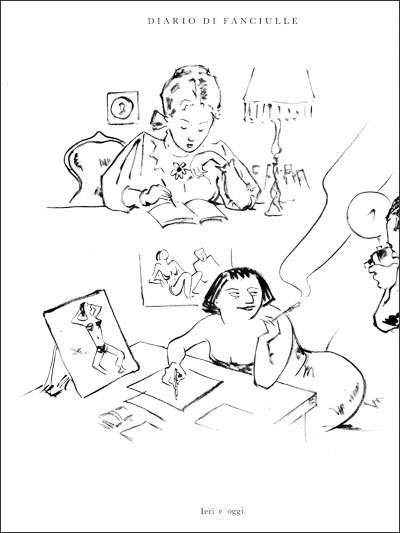
Many of the sketches follow a “then and now” style:
DIARY OF A YOUNG GIRL
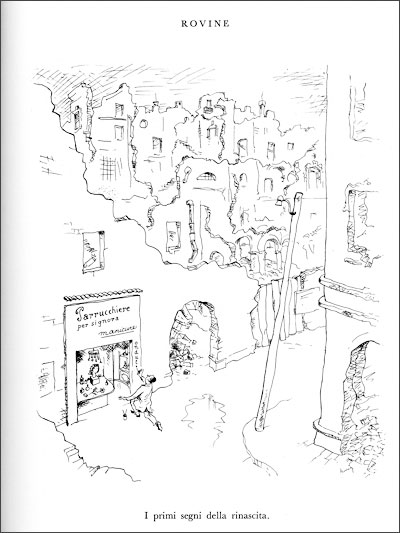
Surprisingly, some of Novello’s most optimistic drawings are of the post-war period, and show how society rebuilds and returns to normality. Of the war itself there is nothing… the artist was in uniform, and his impressions were published in separate books, not in the daily papers.
Here, a ladies’ hairdresser paints the signs on his new beauty salon. That’s how life reboots when the insanity is over.
RUINS
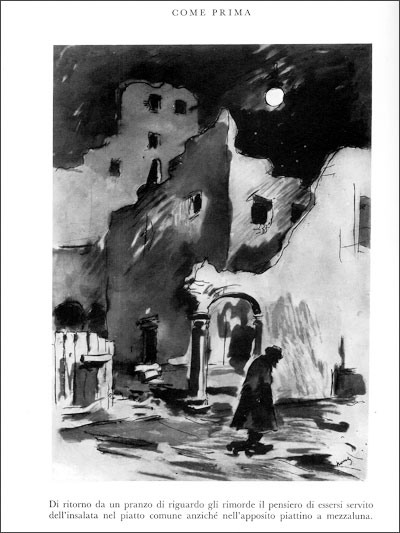
Still, Novello can’t resist pointing out that with normality come back all the petty norms and useless mannerisms that existed before the war. The very name of this volume, Dunque dicevamo (“So, we were saying”) derives from this fact — many of the sketches in it illustrate how people pick up just where they’d left off before the war, ignoring the lessons of the terrible intervening years.
LIKE BEFORE
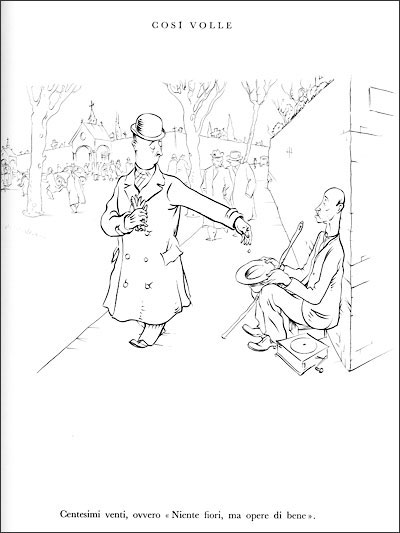
Many of the sketches dissect ordinary situations, to expose the hypocrisies and weaknesses of human character. And although he shows them in the context of Italian society, their lessons can apply to many other nations… take a good look around you!
After the funeral, this scoundrel uses the deceased’s generous sentiment to justify his stinginess.
IT WAS HIS LAST WISH
In the following sketch Novello’s sympathy, clearly, is with the last student’s family…
EVERYTHING IS RELATIVE
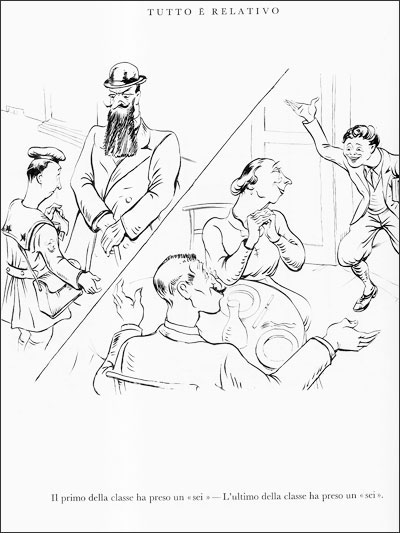
The last of the class has taken a “six”.
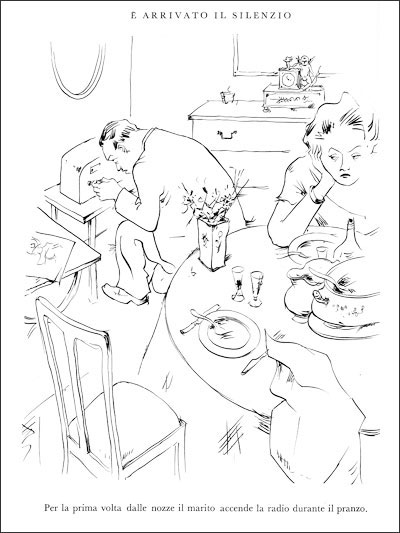
Note that here it is turning the radio on which denotes the arrival of silence. Novello’s captions are as finely honed as his drawings in capturing the nuances he’s after.
THE SILENCE HAS ARRIVED
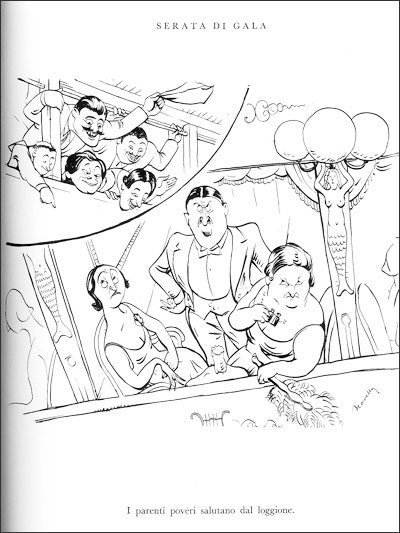
These nouveaux riches in their plush box have a problem with their poor relatives who spotted them from the gallery… which doesn’t bother the latter one bit, clearly.
GALA NIGHT
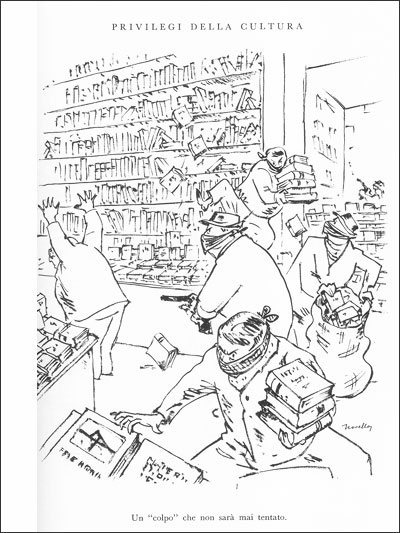
Can’t disagree with the next one… so, should we book lovers be glad about it or not?
PRIVILEGES OF CULTURE
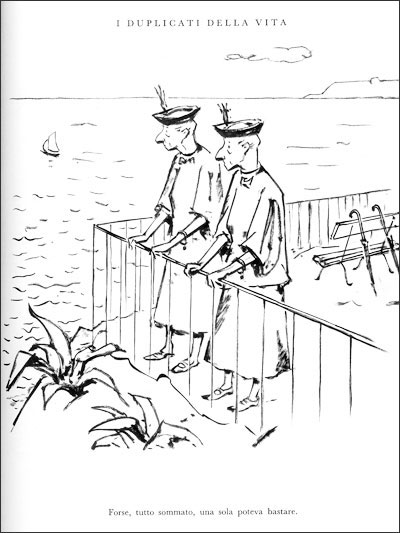
Some cartoons are just for fun, though, like this one:
THE DUPLICATES OF LIFE
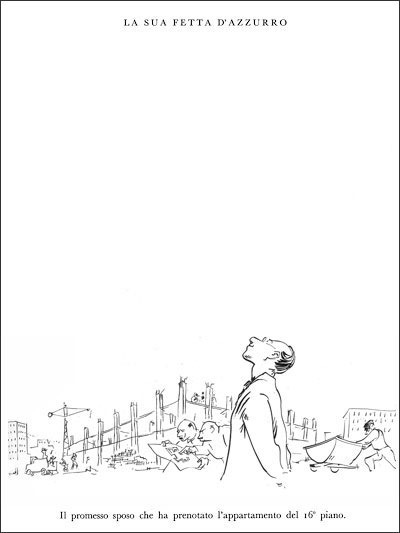
And a last one, to end this article on an optimistic note:
HIS SLICE OF BLUE
There are hundreds more, and until someone publishes a well deserved English translation, you can get an Italian “best of” compilation — for example here. And a short English biography of Novello’s long and eventful life is available here.