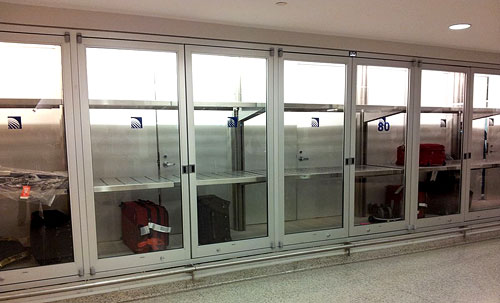
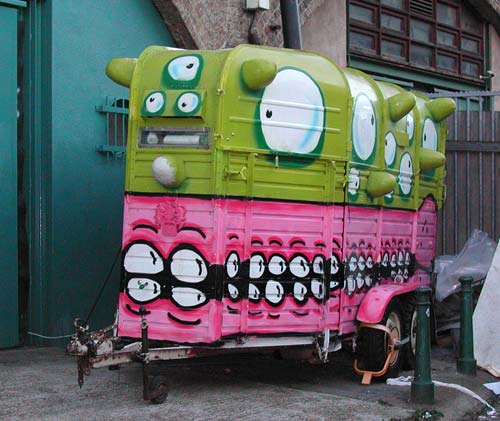
Every seasoned traveler knows the drill: you go to baggage claim, everyone’s bags arrive except yours, and you start running around to try and locate it. If you’re lucky, you end up finding your suitcase standing, forlorn and confused, with a few other bags in some corner or another. How it got there nobody can … Read more
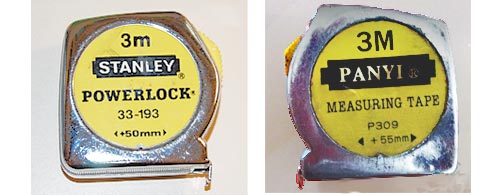
Here are two retractable tape measures. The one on the left is a classic by Stanley, the other, made by Panyi, clearly a cheaper clone. Looks the same, works the same… except for one small difference. Notice the difference? This type of tape measure has a stated offset printed on it, equal to the width of … Read more
Today we have a guest post from our loyal reader George Trudeau of Hyannis, Massachusetts. George sent me this photo: And here is the story: I went to a Doctor appointment and took the elevator up to the second floor office by pressing the great big 2. When I left the office, I was still … Read more
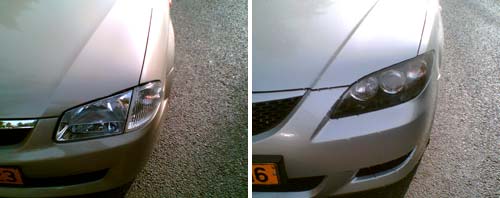
Here are the headlamps of two Mazda cars. On the left, a Mazda 323 from the first half of the past decade, the other a Mazda 3 from the second half. Both fine family cars. See the difference in design strategy? The car on the left has the headlamp split into two parts. The one … Read more
New article on my History of Computing site: Elisha Kally’s water flow calculator, a sophisticated network calculator based on the Hazen-Williams formula. This ingenious slide rule can calculate flows and hydraulic head losses in complicated networks comprising up to six different pipes, all at once. Check it out!
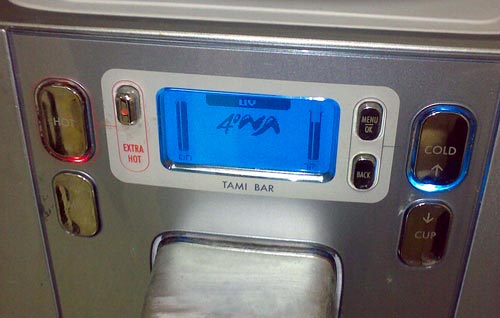
Here is the control panel of a counter-top cold/hot Tami 4 water bar. Push a button – you get hot water. Push another – here’s a refreshing cup of cold water. But… which button?! Of course, that’s why the buttons – all seven of them, for there’s a lot more you can make this glorified … Read more
Form, they say, follows function… which leads to many utilitarian everyday products. But every now and then you run into a design detail that shows inspired abuse of this principle: some unknown designer decides that the product also needs to be lovely, or unconventional, or humorous. Here’s an example I’ve come across: a drain cover … Read more
Not all cool ideas are actually good. Back in 1983, around the time the IBM PC made its debut, my boss at Intel had acquired a very innovative personal computer: the Hewlett Packard 150. I remember it well; it was a really cool machine – at least in the context of its day: it had … Read more
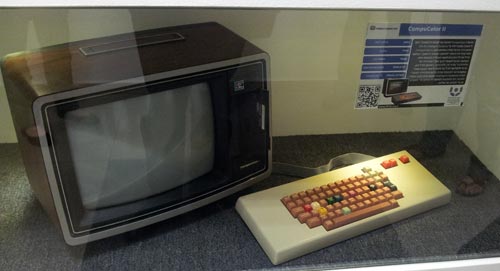
While taking in the wonderful Israel Perosnal Computer Museum in Haifa I came face to face with the Intelligent Systems Compucolor II, a bizarre 1977 home computer built into a repurposed 13″ TV set. What drew my attention was the strange keboard layout: the arrow keys were clustered at the top right corner. This is … Read more