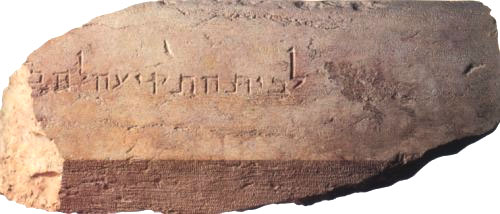
These days the preference for shoddy, cheap, use-and-discard products is all over the place. Here is an example: This sorry street sign in Jerusalem has taken on a very “artistic” look – because it is made from a blue layer of stick-on plastic sheet over a metal plate. Over time the plastic started to shrink … Read more
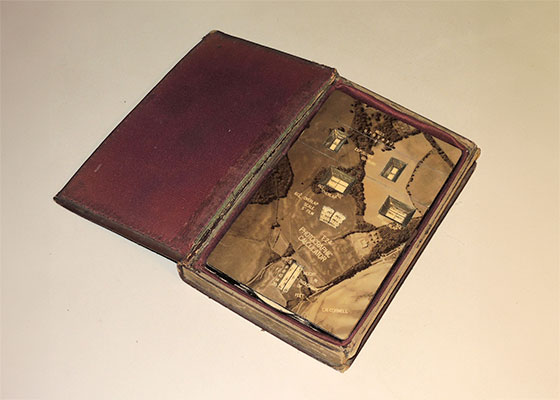
Some of the most fascinating items in my History of Computing collection are the one-of-a-kind, undocumented ones. The latest such addition to the collection is a calculator hidden in a book-like case, that has no mention anywhere that I could find. This is Charles Cornell’s F.24 aerial photography planning calculator, and you can read all … Read more
Was on a United flight enjoying my coffee (such as it was), when I noticed the text on the paper cup. Nice cup: Makes them feel very ecological, no doubt… someone in Marketing must’ve though it a good point to brag about. Except that it’s completely meaningless, of course. This statement remains true even if … Read more
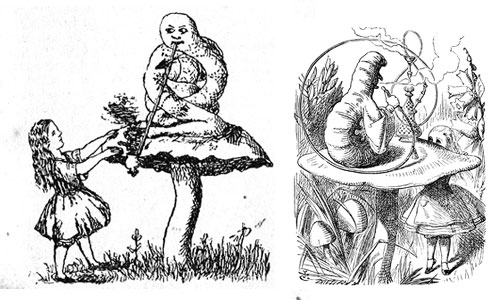
Say “Alice in wonderland”, and the image that comes to mind (well, at least in the generations that used to read books) is a little girl in a tidy Victorian knee-length puffed sleeve dress with a pinafore, and long blond hair – the girl in the image at right. This comes from the famous illustrations … Read more
This Barometer was made in Florence some 100 years ago, and served my late grandfather, first in Italy, then in Israel; it ended up on my wall, a family heirloom to delight the heart of any engineer. It is a large (23 cm across) Aneroid Barometer, an instrument to measure atmospheric pressure by means of … Read more
I was sitting in the lobby of the Shaare Zedek hospital in Jerusalem, and I noticed on the chair next to me a small booklet someone had discarded there. An idle look turned to admiration as I examined it and realized what it was. The cover reads “EEG test – the Institute for Neurological Diagnosis“, … Read more
New on my Possibly Interesting web site: Cloning a Vibroplex bug, where I describe the venerable Vibroplex semi-automatic telegraph key – and the improvised clone I made as a young radio amateur. Enjoy!
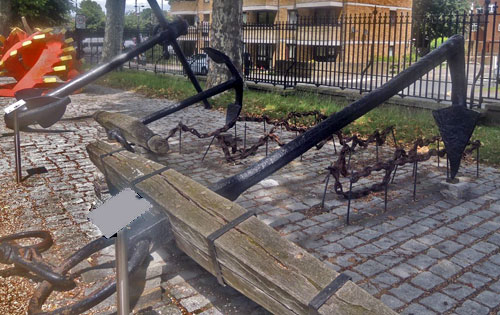
Form follows function! Here is a row of anchors, which I photographed in Greenwich in the UK. You’ll note the one in the foreground has a single fluke (as the pointy ends of an anchor are called). The sign says this anchor is from around 1820. So why would they produce an anchor with only … Read more
See the mechanic working on my Renault Clio. Do you know what he’s doing? Looks like he’s trying to squeeze his arm into a tiny space between some metal beams in the engine compartment frame. Why is he doing that? Because he wants to replace a burned out light bulb in the headlamp assembly. Actually … Read more
Robert Owen Wynne-Roberts, MICE (Member of the Institution of Civil Engineers), FRSI (Fellow of the Royal Sanitary Institute), was a talented civil engineer. He passed away in 1935, but at least one result of his engineering talent abides: the Wynne-Roberts hydraulic calculator, a specialty circular slide rule for computing flow in water pipes and sewers. … Read more