
A visit to the new V&A Storehouse
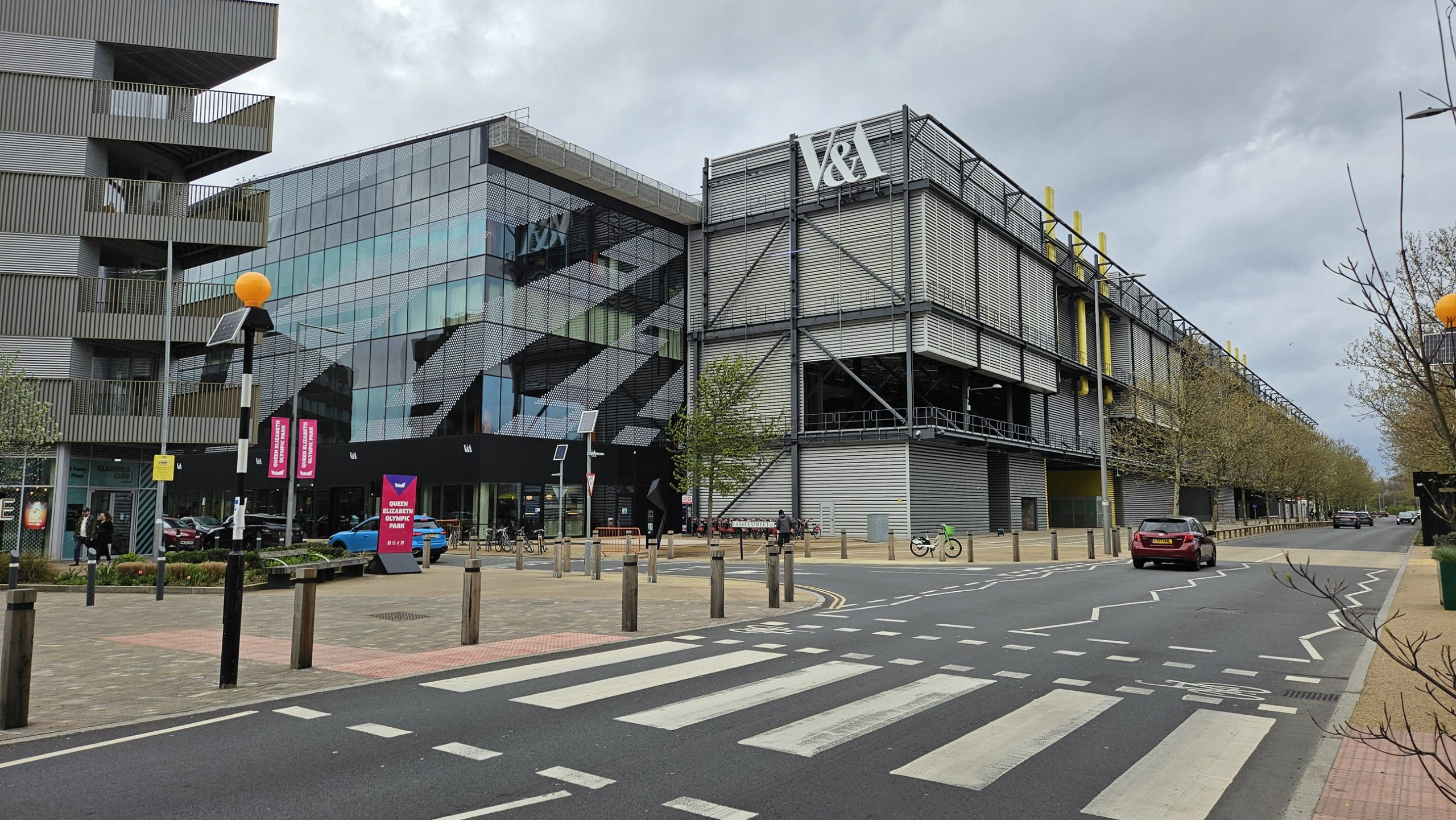
Collectors vary the in scope of their collections. Some are super focused, like those who specialize in “All Japanese slide rules”. Some cast a wider net, like “Items from the history of computing” (as in my collection). And some pack rats remain entirely unfocused, and collect anything that strikes their fancy, limited (mercifully?) by their available funds and apartment size.
But in London I ran into a collection that has almost no limits. This is the Victoria and Albert museum, possibly the largest in the planet, which contains millions of items in a wide range of domains; the ultimate pack rat with the budget of an (ex) empire behind it. Now, the main V&A museum in South Kensington is a proper museum, where tens of thousands of objects are shown in well-curated sections dedicated to different domains, and everything explained in neat labels. Which leaves over six million items that were in various storage facilities, hidden from the public eye.
But in 2025 the V&A opened to the public a new kind of storage facility, the “V&A East Storehouse”. This could have been a drab facility – think Amazon, or that military depot at the end of “Raiders of the lost ark” – but instead they made it into a completely new kind of museum, by making a large fraction of the 250,000 objects stored there accessible to the public.
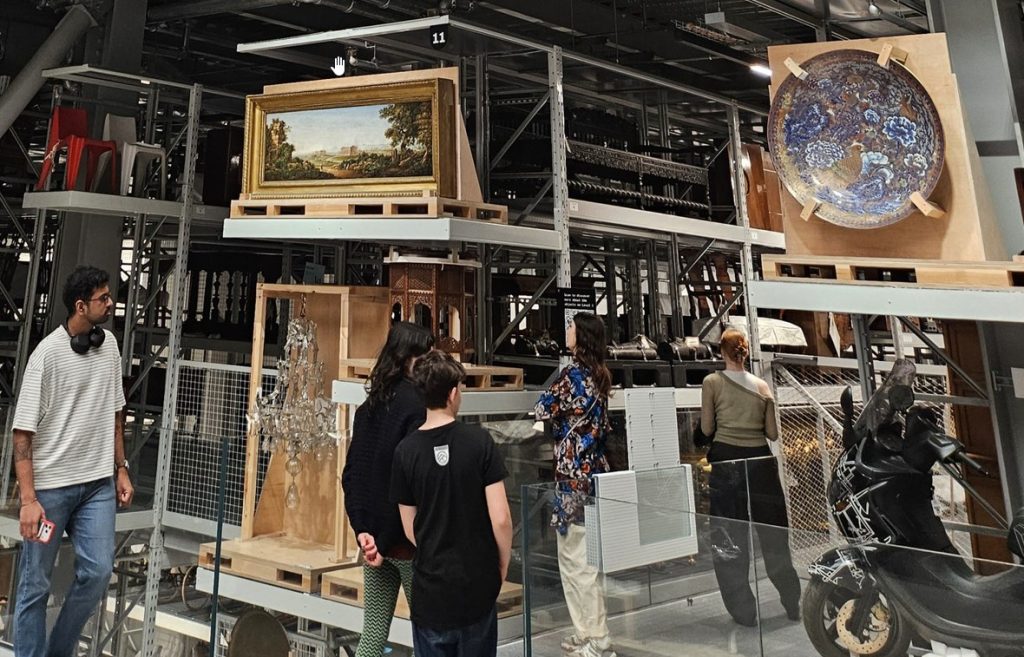
Mind you, they are not accessible as they would be in a regular museum. There is no order; no taxonomy; no rhyme or reason. A Roman bust may sit next to a Victorian doll, an electric guitar and a medieval battle ax; there is no separation between modern office furniture and Chinese porcelain, Islamic ceiling decorations and European oil paintings, vintage TVs and religious artifacts. And none of them are labelled (though QR codes allow you to find them in an app). It’s totally chaotic – and quite wonderful. And there are no galleries, as such: the huge four story space is crisscrossed by stairs and corridors and terraces and passages and open areas, with the collected items displayed every which way at arm’s reach for a totally immersive experience. Like you see here:
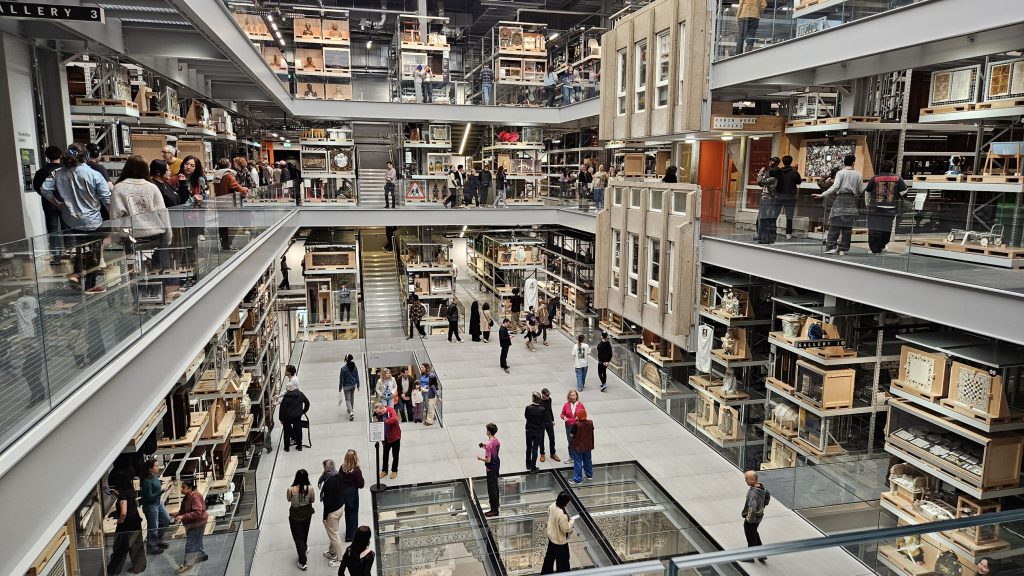
The objects surround you on all sides. In fact, some of the viewing is even done top down through glass floors, like here:
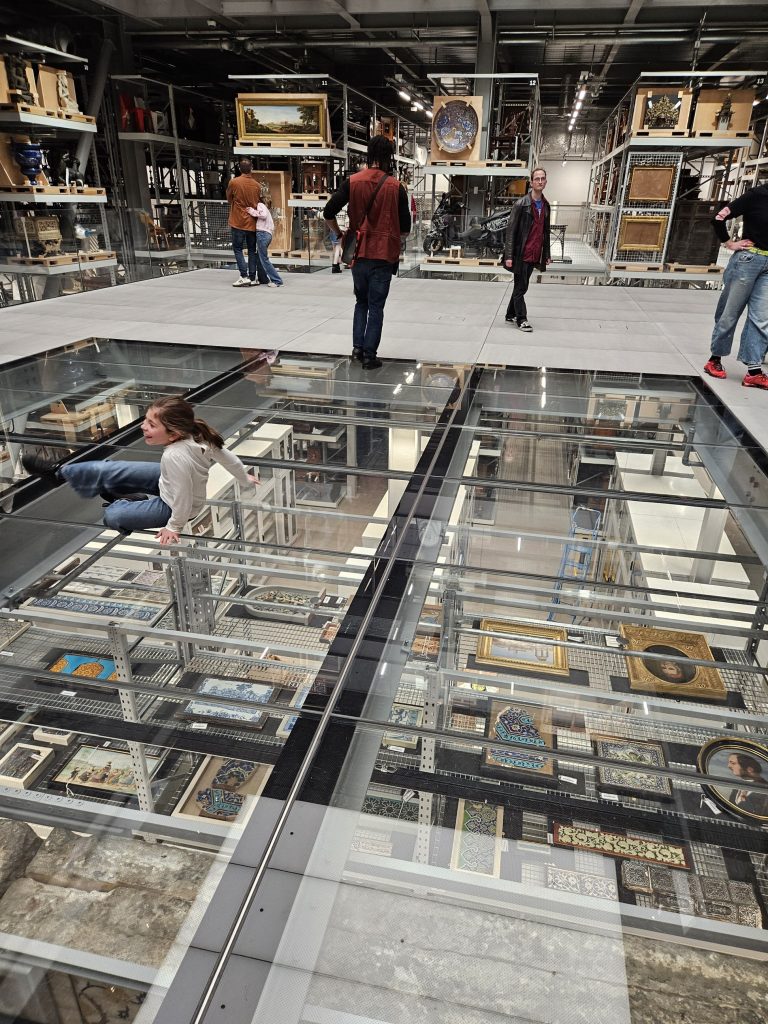
This chaotic exhibit is not everybody’s cup of tea… but for my part I really loved the in-your-face variety, and the lack of curatorial explanations only made me think more. And as a curator myself, I loved the way this place’s designers found this amazing way to curate an “un-curated exhibition” of just about anything and everything all mixed together.
And it really was everything. This is a humongous “cabinet of curiosities”. Here are some snapshots:
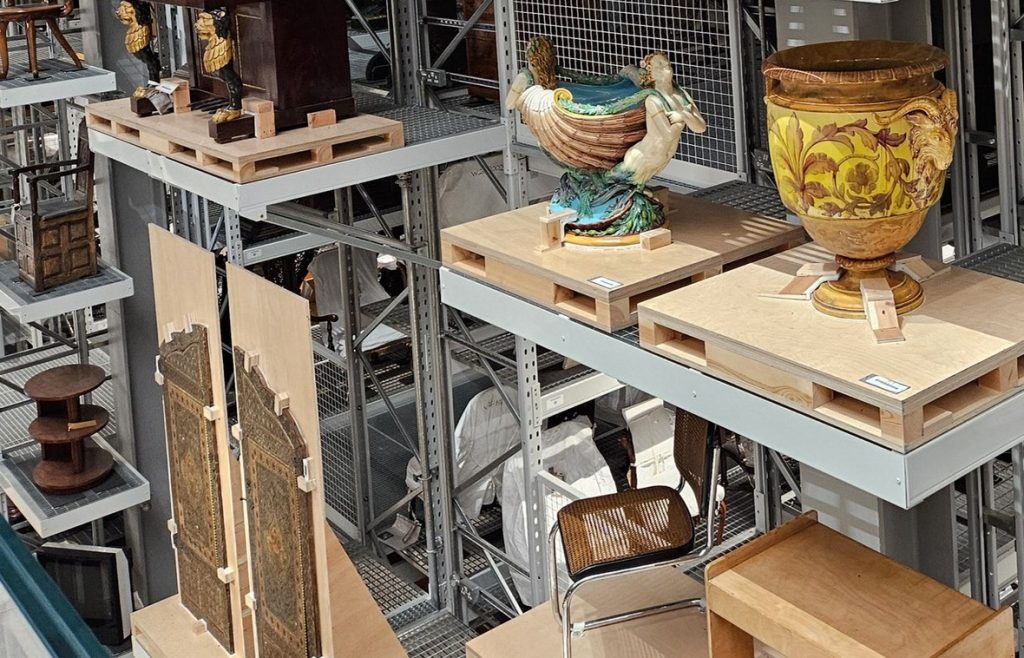
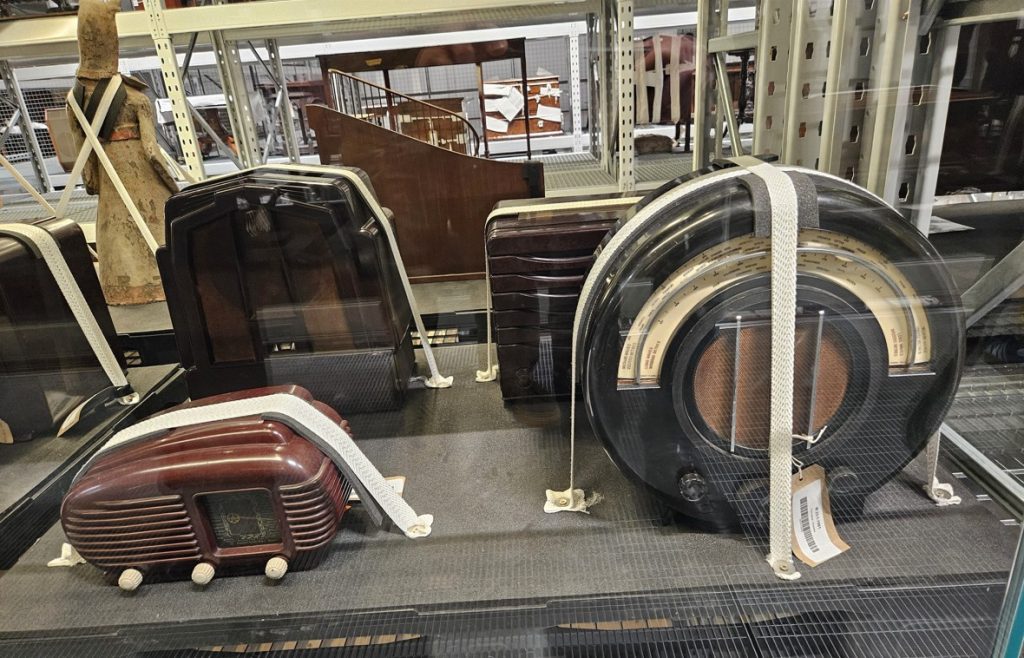
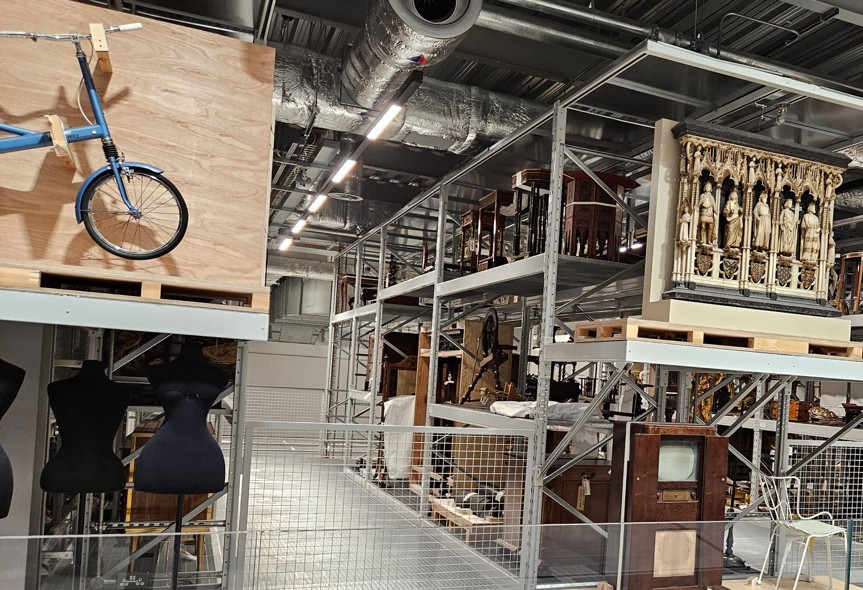
There are also “study centers” hidden in the building, notably the David Bowie center with a huge archive about the artist. And there is the Order an Object system, where anyone can request (online, in advance) to see any object from storage up close when they visit.
It was a really novel experience…. good job, Victoria and Albert! (OK, not really them, I guess. But good job!).
Here is the Museum site.